

Werx Academy
What Is a Construction Proposal (and How to Write One)?
The customer-facing offer that wins the job and sets up clean billing from day one.
A construction proposal is your customer-facing offer for a job. It defines scope, price, schedule, and terms. An estimate is your internal cost build-up. A proposal is what the client reads, approves, and signs. Clear exclusions and change-order language limit your risk.
What does a construction proposal include?
A strong proposal is easy to skim and easy to defend. It lines up scope, price, and terms so billing and delivery stay on track.
- Scope and inclusions/exclusions: what is covered, and what is not
- Price and allowances: unit prices or lump sum with defined allowances
- Schedule and milestones: start date, phases, and completion targets
- Payment terms: deposit, progress or AIA or T&M, retainage, due dates
How do you write a contractor proposal step by step?
Use the same workflow every time. That keeps each proposal complete, consistent, and easy to approve. Start from a finished accurate estimate.
- Confirm drawings and specs, list assumptions, and address RFIs
- Price labor, materials, subs, and equipment from current data
- Write clear inclusions, exclusions, and allowance details
- Set the payment schedule and an approval or signature block
What pricing and terms protect your margin?
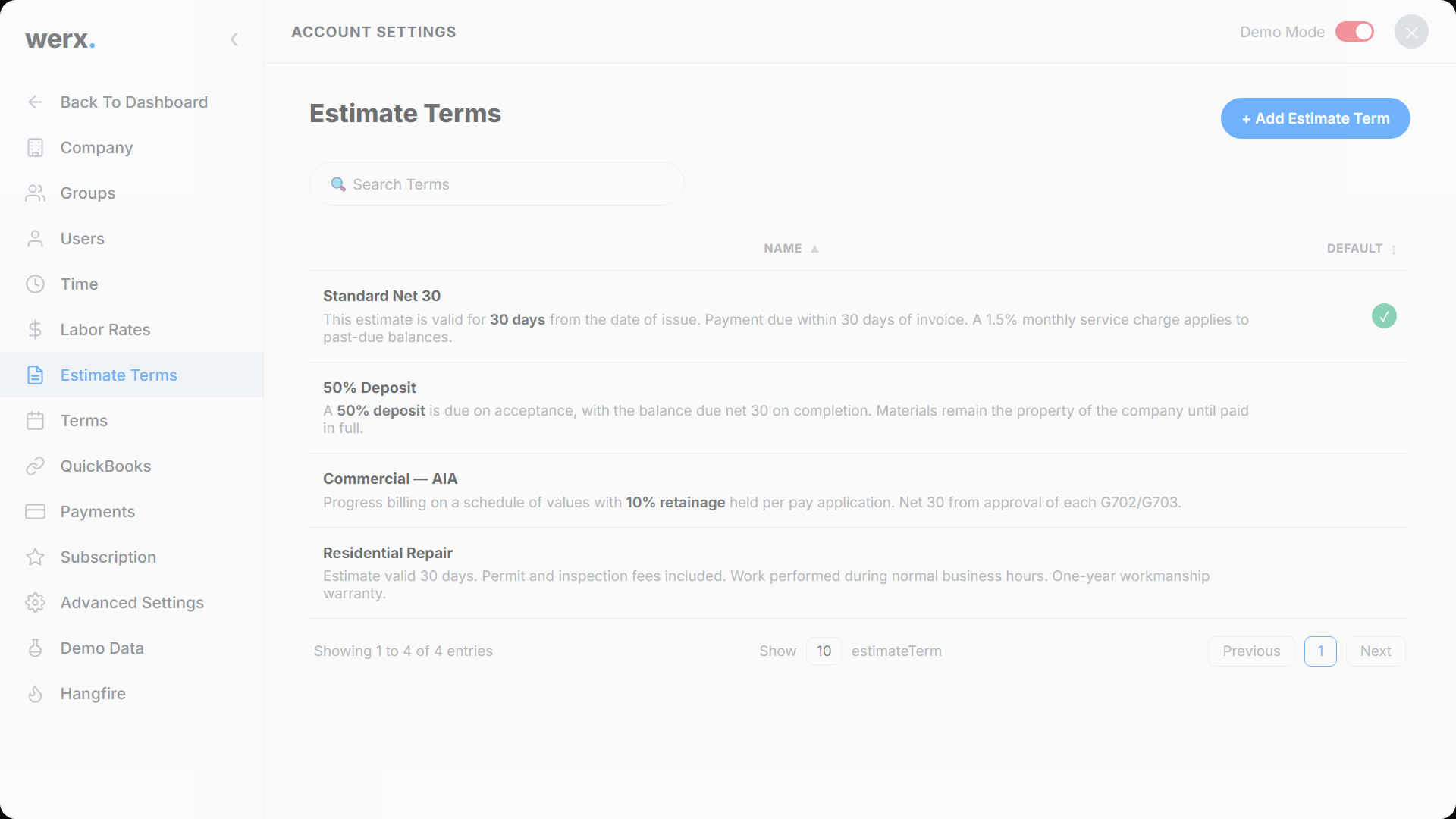
Tight terms cut disputes and keep cash flowing through the job. Spell out the rules before you start work.
- Allowances and contingency: cover scope surprises without hiding cost
- Change orders: require written approval before any extra work
- Retainage and late fees: state the rates and the timelines
- Validity window: add a quote expiration to handle price swings
How should you lay out a proposal?
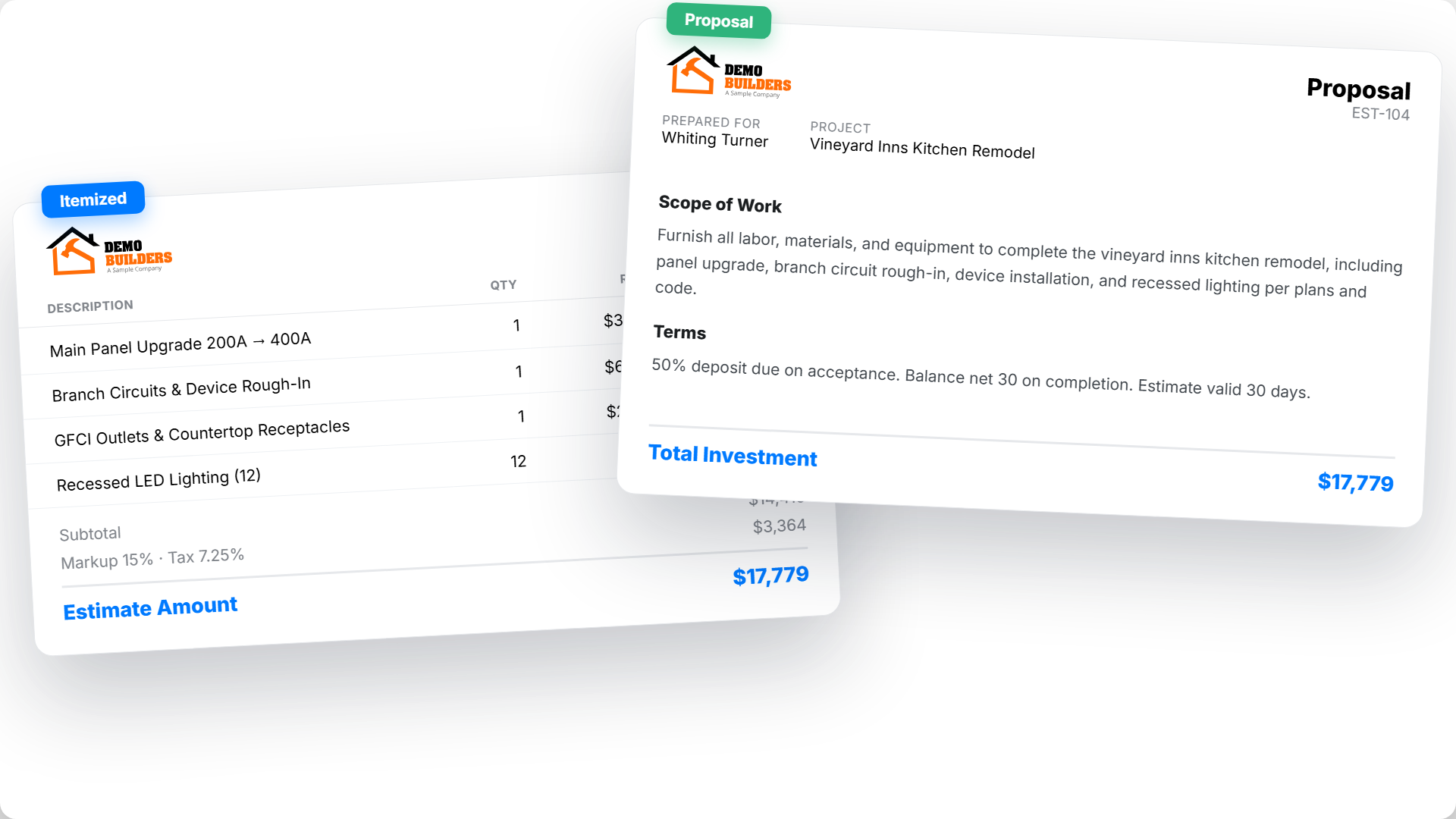
Make it skimmable for owners. Give enough detail for approval and financing.
- Lead with an executive summary, then a detailed breakdown
- Group lines by trade or phase to match your future schedule of values
- Attach drawings, photos, specs, and certificates
- Enable e-signature and online payments
What proposal mistakes should you avoid?
Most job disputes start in the proposal. Fix these before work begins.
- Vague scope or missing exclusions
- No written change-order process
- Unclear milestone or retainage terms
- No price validity or schedule assumptions
When should you send a detailed proposal?

Send a detailed proposal on larger jobs, new clients, and any work with phased billing. Detail builds trust and protects you in a dispute.
A short quote can work for small repeat jobs. Even then, keep your scope and exclusions in writing. To lift your close rate, see increase proposal win rates.
- The job is large or runs in phases
- The client is new or price-sensitive
- You bill by milestone, AIA, or progress
- A lender or owner needs documented terms
How does Werx help you create proposals faster?
Contractor software like Werx turns estimates into proposals clients approve online. Then it converts them into contracts, SOVs, and a first invoice. No double entry.
- Build with Werx Estimates templates and cost codes
- Turn an accepted proposal into an SOV and progress billing
- Collect deposits with Stripe-powered payments
- Sync to QuickBooks Online to skip double entry
Key takeaways
- A proposal is the customer-facing scope, price, schedule, and terms
- Protect your margin with clear exclusions, a CO process, and a validity window
- Lay it out to mirror your future SOV and billing method
- Werx handles online approval, payments, SOV, and QuickBooks sync
Frequently Asked Questions
Is a proposal the same as an estimate?
No. An estimate is your internal cost build-up. A proposal is the customer-facing offer with scope, price, schedule, and terms that the client approves.
What payment terms should I include?
Spell out the deposit, the billing method, retainage if any, due dates, and late fees. Clear terms speed approvals and cash flow.
Can clients approve proposals online?
Yes. With Werx, clients e-sign and pay deposits online. Your proposal then converts into a contract project and billing schedule.
Ready to grow your business?
Start your 14-day free trial today. No credit card required.
No credit card required · Free migration assistance · Cancel anytime