

Werx Academy
How to Increase Proposal Win Rates (Options & Follow-Up)
Buyers pick the contractor who makes the choice easy. Three tiers and steady follow-up do that.
To raise your proposal win rate, remove friction and help buyers choose. Offer two or three option tiers. State what is included and what is not. Then follow up on a fixed schedule.
Add online approvals and deposits so clients can say yes the same day. The contractor who is clear, fast, and easy to pay usually wins. Better proposals also protect your margin.
What do buyers need to say yes?

Most buyers pick the contractor who makes the decision easy and low-risk. Give them clarity, choice, and a simple way to pay. Doubt is what kills a bid.
- Clarity: scope, allowances, and what is not included
- Choice: options at a few price points, side by side
- Timing: expected start and finish windows
- Convenience: online approval and deposit payment
How do you build option-driven proposals?
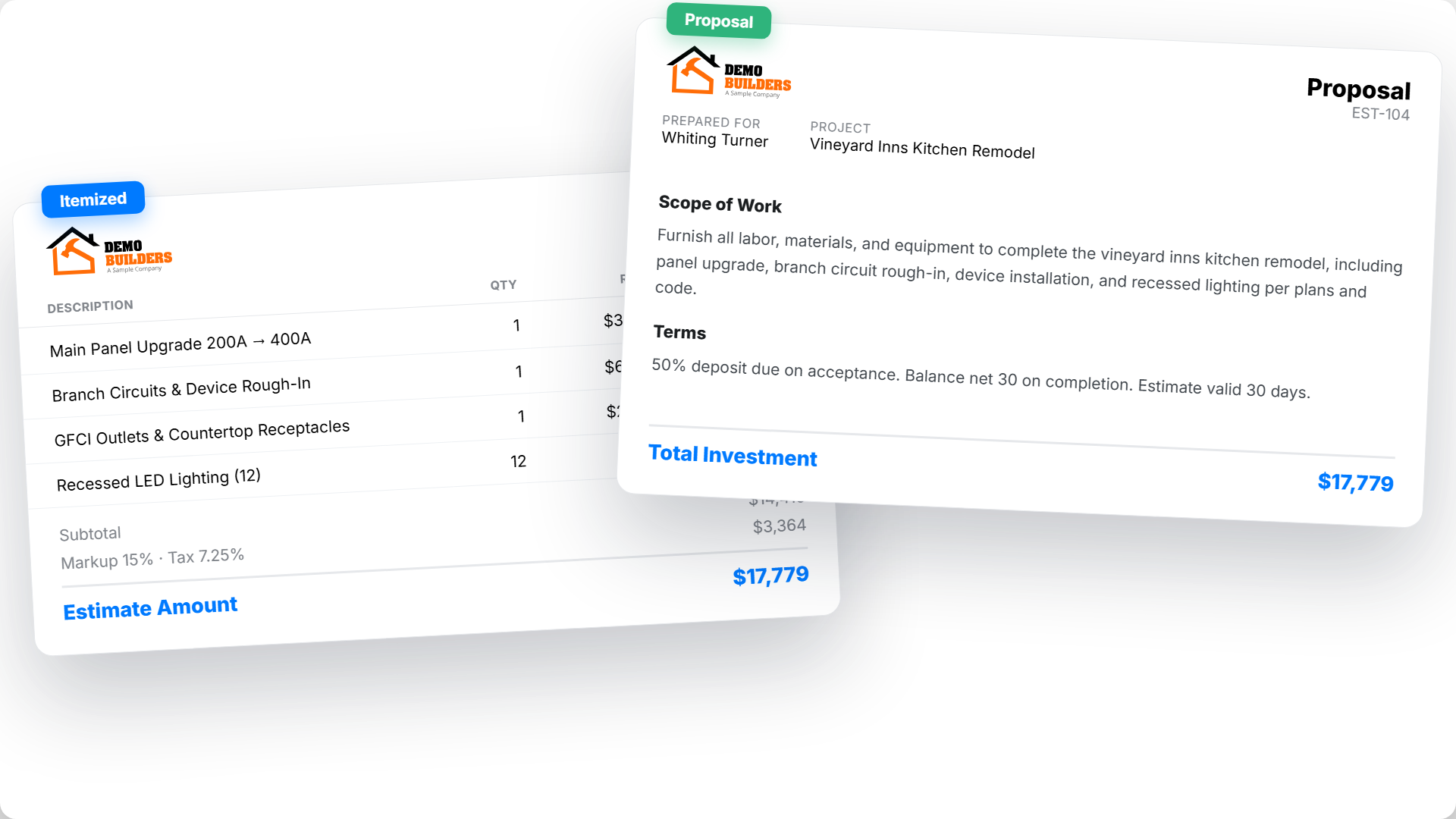
Give buyers control without rebuilding every bid from scratch. A Good, Better, Best layout works for most trades. Keep your internal detail and show a clean summary.
- Good, Better, Best: base scope, upgrades, and a premium package
- Add alternates for finish level, warranty, or materials
- Use a 15 to 30 day validity window to manage price risk
- Show a customer-friendly summary, not your full takeoff
How do you write scope that prevents disputes?
Set expectations up front so change orders do not feel like surprises. Spell out what the price covers. Name who pulls permits.
- List inclusions, exclusions, and assumptions
- Call out permit and inspection responsibilities
- Note allowances with clear upgrade paths
- Reference lead times for critical materials
How should you present price?
Anchor value with side-by-side options. Make the payment path simple. A deposit or milestone plan lowers the buyer's risk.
- Show options side by side with clear differences
- Offer a deposit or a milestone schedule
- Let clients approve and pay online to reserve the slot
- State your terms in plain language
What follow-up cadence wins deals?
Deals are won in the follow-up. Keep it consistent and light. Tie this to your contractor CRM so nothing slips.
- 24 hours: send the proposal with a link and an offer to answer questions
- 72 hours: a short check-in that restates the option differences
- 7 days: ask for last questions and set the next step
- 14 days: a brief nudge before the price validity expires
How do you move from accepted proposal to kickoff?
Lock the scope and move straight to billing and scheduling. Speed here protects your start date. Nothing should be retyped.
- Set up the job with a schedule of values
- Choose billing: AIA or progress or time and materials
- Collect the deposit with online payments
- Sync to QuickBooks Online
When should you stop chasing a bid?
Follow up steadily, but know when to stop. A buyer who goes silent past the validity window is usually gone. Move that effort to fresh leads.
Keep a deal alive when the buyer is still asking questions. Drop it when there is no reply after the final nudge. Send a polite last note and mark it Lost.
- Keep chasing while the buyer engages
- Stop after the final nudge with no reply
- Mark it Lost and study why you missed
How does Werx help you win more?
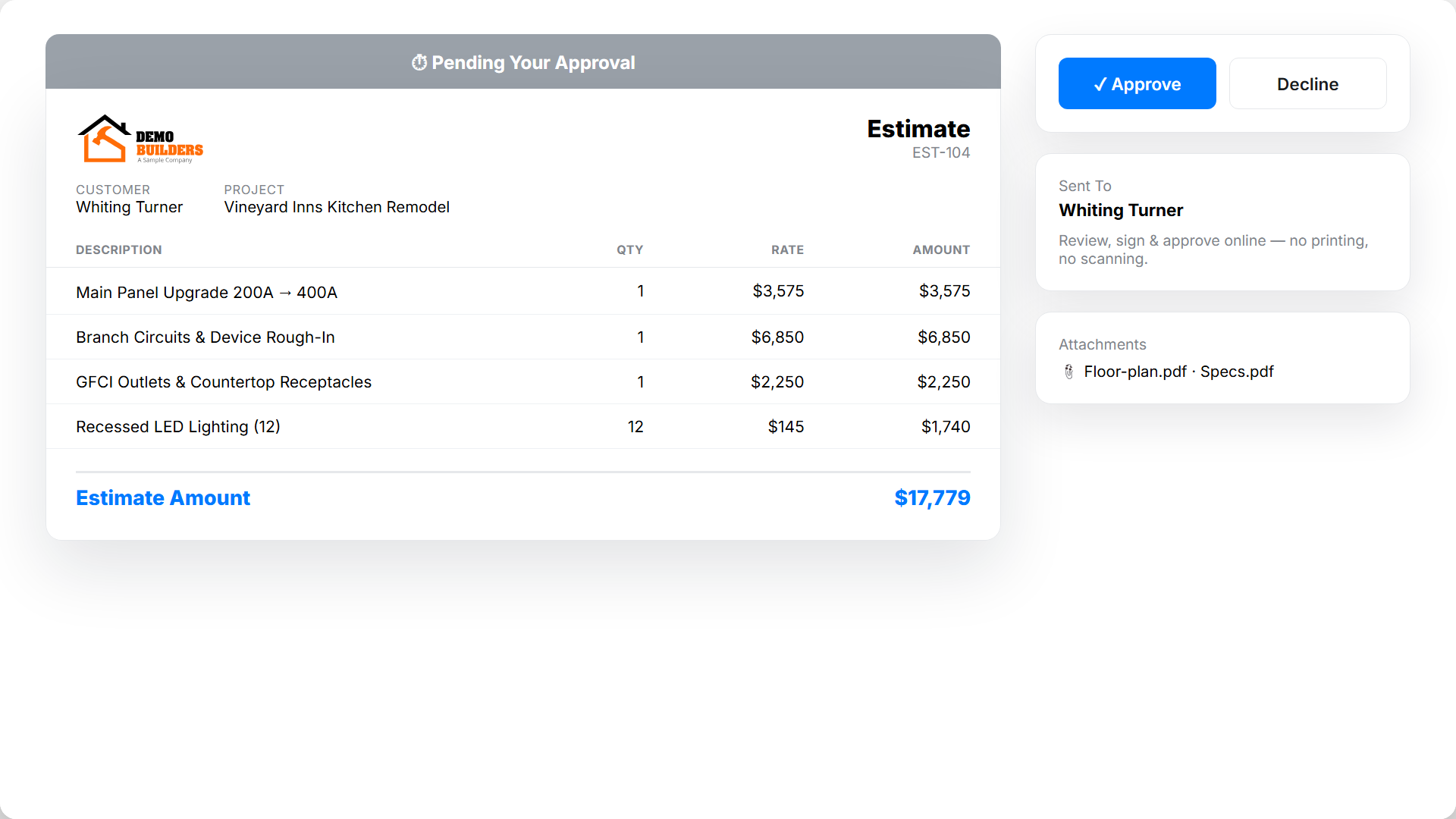
Contractor software like Werx turns templates into optioned proposals. Clients approve and pay online in one step. Wins roll into billing with no rework.
Werx Estimates builds Good, Better, Best proposals with branded PDFs and e-approval. Accepted bids convert to a schedule of values and AIA or progress pay apps. Everything syncs to QuickBooks Online for clean financials.
Key takeaways
- Offer two or three options with clear differences
- State inclusions, exclusions, and a price validity window
- Use a steady 24-hour, 72-hour, and 7-day follow-up cadence
- Contractor software like Werx adds e-approvals, deposits, and instant handoff to billing
Frequently Asked Questions
How many options should I include?
Two or three is ideal. A base option plus one or two upgrades gives choice without analysis paralysis.
Should I itemize every line?
Use a customer-friendly summary with clear inclusions and exclusions. Keep the detailed takeoff internal and attach alternates where helpful.
What is a good follow-up schedule?
A 24-hour sent notice, a 72-hour check-in, a 7-day nudge, and a final reminder before the price validity ends.
Ready to grow your business?
Start your 14-day free trial today. No credit card required.
No credit card required · Free migration assistance · Cancel anytime