

Werx Academy
What Role Does Job Costing Play in Cash Flow Stability?
Job costing ties every dollar to a project, so you bill right and spot losing jobs before they drain cash.
Job costing tracks every cost on a project: labor, materials, equipment, and overhead. It keeps your spending and your billing in step on each job. That is what makes cash flow steady instead of a guessing game.
Why does job costing matter for cash flow?
Without cost tracking, you can spend more than you bill. The gap shows up as a cash shortage weeks later. Job costing ties each expense to a project so profit stays clear.
- Stops overspending on labor or materials
- Sharpens billing accuracy and collection
- Flags a problem job early, while you can fix it
For the live-data view of this, see real-time job costing.
What are the benefits of accurate job costing?
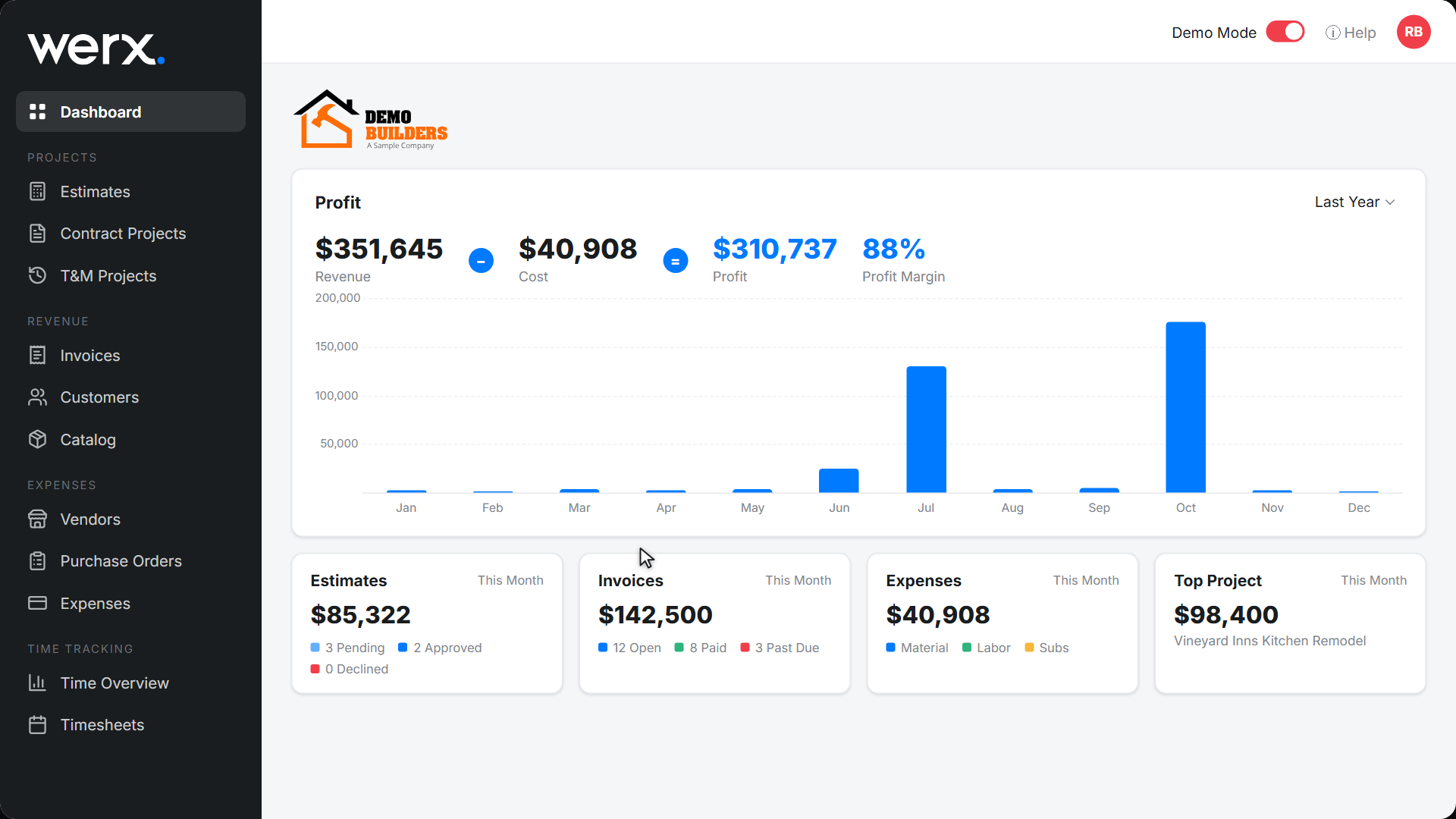
Good cost data gives you something to act on. It helps both today's cash and the next bid.
- Clear view of profit on each job
- Better forecast of cash needs
- Confidence when you bid future work
- Fewer disputes with clients over costs
A solid cost history also feeds your cash flow forecast.
What makes job costing hard?
Job costing matters, yet many contractors struggle with it. Outdated systems are usually why.
- Manual spreadsheets with missing data
- Time-tracking errors out in the field
- Costs filed under the wrong code
- Accounting and project tools that do not talk
When should you track costs at the job level?
Track at the job level on any project with real risk. The bigger the job, the more it pays off.
Always job-cost work that runs more than a few weeks. Do it on any fixed-price job where a cost swing eats your margin. For tiny time-and-material tickets, a simpler tally can be enough.
- Long jobs: track by phase and cost code
- Fixed-price jobs: watch cost against the bid
- Small T&M tickets: a lighter tally works
How does contractor software strengthen job costing and cash flow?
Contractor software like Werx links job costing with billing and QuickBooks. You get accurate, real-time numbers that make cash flow predictable.
- Track labor hours and costs from the field
- Sync material and expense data with accounting
- Auto-categorize costs for accuracy
- See cash flow at the job and company level
Key takeaways
- Job costing keeps spending and billing aligned on every project
- Accurate costs flag losing jobs before they drain cash
- Track at the job level on long and fixed-price work
- Werx links job costing, billing, and QuickBooks in real time
Frequently Asked Questions
What is job costing in construction?
It tracks every project cost, like labor, materials, equipment, and overhead, to measure profit accurately.
How does job costing affect cash flow?
It keeps expenses from passing revenue. That makes cash flow more predictable and cuts financial surprises.
Do small contractors need job costing?
Yes. Even small jobs go over budget. Job costing gives smaller contractors the clarity to stay profitable.
Ready to grow your business?
Start your 14-day free trial today. No credit card required.
No credit card required · Free migration assistance · Cancel anytime