

Werx Academy
What Are Payroll Liabilities in Construction?
They are wages, taxes, and benefits you owe but haven't paid yet. Track them by job to keep margins honest.
Payroll liabilities are amounts your company owes but has not paid yet for a payroll cycle. They include taxes, benefit contributions, workers' comp, and other withholdings. In construction, you track them by job, phase, and cost code. That keeps labor costs and margins accurate across projects.
What are the core payroll liabilities for contractors?

Construction payroll creates money you owe to workers, tax agencies, and benefit funds. Knowing what is included keeps you compliant. Posting it on time protects cash flow.
- Employee withholdings: federal and state income tax, employee FICA
- Employer taxes: employer FICA match, FUTA, and state unemployment (SUTA)
- Workers' compensation: premiums accrued by trade or class code
- Benefits and fringe: health, dental, retirement match, union fringe, PTO
- Other deductions: wage garnishments, union dues, court-ordered amounts
What construction-specific requirements apply?
Crews move between jobs and jurisdictions. So construction payroll adds extra reporting and classification rules.
- Certified payroll and prevailing wage: often required on public work
- Multi-state and local taxes: rules vary by work location
- Union reporting and fringes: track per trade and remit to the right fund
- Workers' comp class codes: assign the correct code per trade to reflect risk
- Overtime compliance: capture actual hours and breaks to avoid penalties
How do payroll liabilities affect job costing?
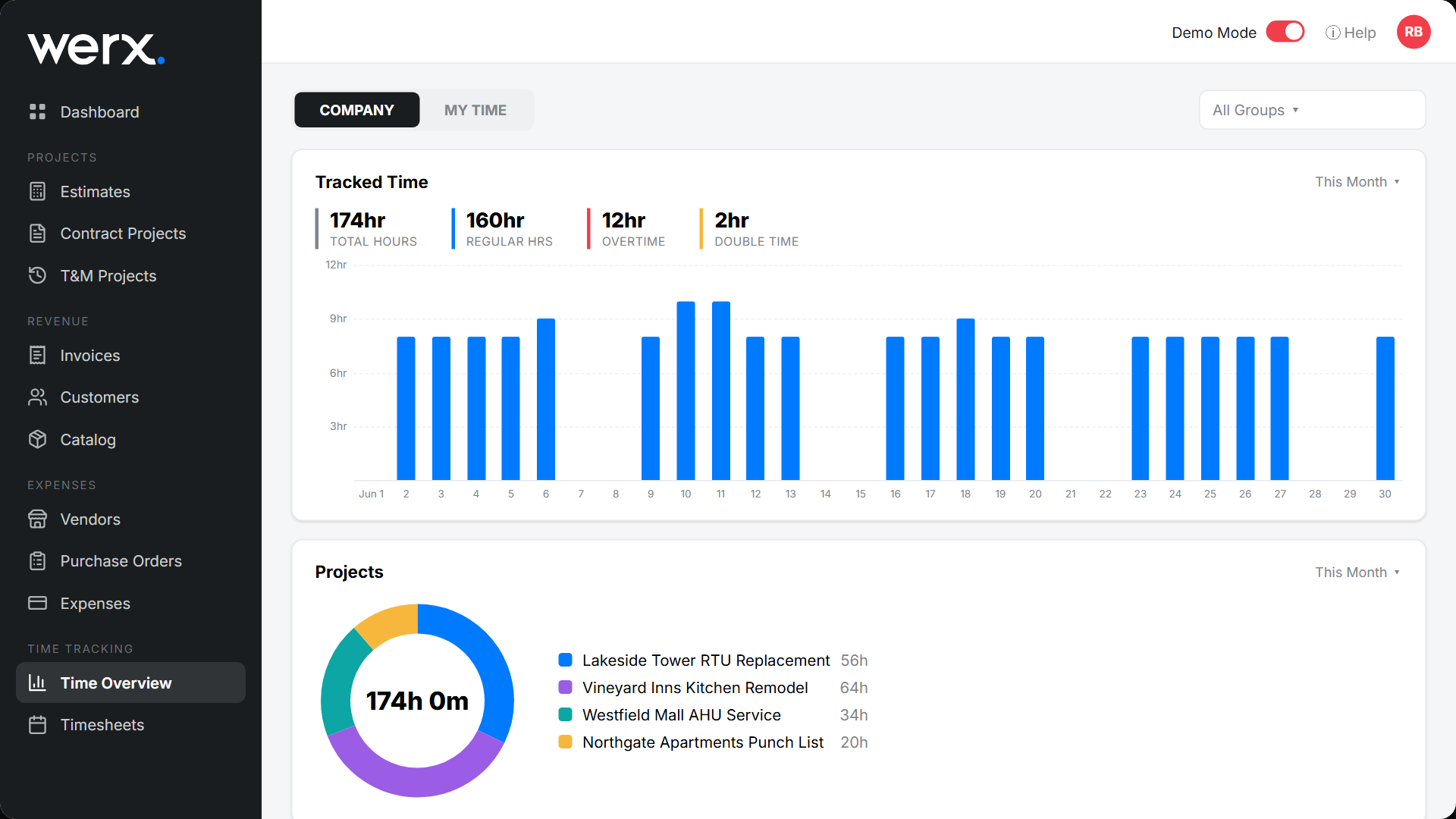
To see true profit, add labor burden to direct wages. Burden means employer taxes, comp, and benefits. Allocate it by job and phase to keep budgets real.
- Build a burden rate by trade (taxes, benefits, comp divided by wages)
- Post burden to the same cost codes as field labor
- Review job-level labor reports weekly to catch overruns
- Feed accurate hours with time tracking software
What are the common mistakes to avoid?
Most payroll problems start with manual steps. Mismatched data between field, billing, and books makes them worse.
- Misclassifying workers (1099 versus W-2) or wrong comp class code
- Missing deposit deadlines or under-remitting taxes
- Skipping burden, so labor looks cheap and margins fade
- Paper timesheets that miss hours, OT, or job codes
How does software keep payroll liabilities accurate?
Contractor software like Werx connects field time, job costing, and billing. Then it syncs clean records to your accounting. So liabilities post to the right places.
- Capture field hours with Werx time tracking by job and phase
- Push job-cost detail through QuickBooks integration
- See labor burden in real time on project dashboards
- Keep audit-ready records that match pay apps and job costs
When should you track payroll liabilities by job?
Track by job once labor is a real share of cost. Track by job on any project with phases. Track by job when public work demands certified payroll.
A solo operator with no payroll can keep it simple. Once you hire crews, allocate burden to each job. On public work, review certified payroll and prevailing wage rules early.
- You run payroll for W-2 crews
- You bid public or prevailing-wage work
- You need true labor cost in real-time job costing
- You owe union fringes or multi-state taxes
Key takeaways
- Payroll liabilities are taxes, benefits, comp, and withholdings you owe
- Construction adds certified payroll, multi-state taxes, and union fringes
- Allocate labor burden to jobs to see true margins
- Werx and QuickBooks keep hours, job costs, and liabilities aligned
Frequently Asked Questions
What counts as a payroll liability in construction?
Amounts owed but not yet paid for a cycle. That covers employee withholdings, employer taxes, workers' comp, benefits and fringes, and deductions like garnishments.
How do I calculate a labor burden rate?
Add employer taxes, workers' comp, and benefits. Then divide by direct wages for the period. Use separate rates by trade to reflect risk and benefits.
Do public projects require certified payroll?
Many do. Check your contract and local rules. Prevailing wage, certified payroll reports, and fringe tracking are common on public work.
Ready to grow your business?
Start your 14-day free trial today. No credit card required.
No credit card required · Free migration assistance · Cancel anytime