

Werx Academy
What Are the Biggest Challenges in Construction Finance?
Long jobs, complex billing, and daily cost swings make the money hard to track. Disconnected tools make it worse.
Construction finance is hard for a few reasons. Jobs run long, billing rules are complex, and costs move daily across phases. The result is cash-flow swings, job-cost blind spots, and disputes. The pain grows when data lives in spreadsheets instead of one connected system.
Why is cash flow so volatile?

Payments often lag the work you finished. Retainage is held back. Approvals take time. Materials get paid up front. So even profitable jobs can feel cash-starved.
- Bill on a steady cadence tied to milestones or percent complete
- Cut days sales outstanding with online payment processing
- Invoice eligible stored materials with proof
- Track and release retainage at the right milestones
How do complex billing and retainage rules create risk?
AIA pay apps and T&M demand exact math and documents. A small error on G702, G703, or a retainage line stalls approval. Stalled approvals turn into disputes.
- Standardize your SOV and tie every invoice to it
- Automate AIA billing and progress billing
- Apply retainage the same way across SOV lines and change orders
- Attach photos, receipts, and lien waivers to each pay app
What happens without real-time job cost visibility?
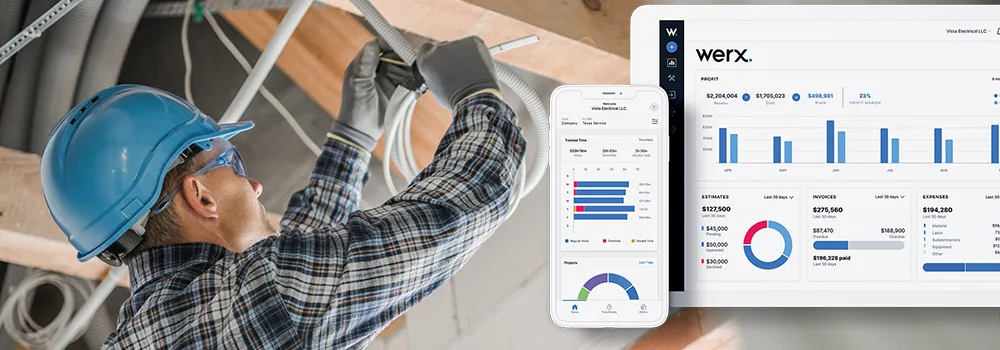
Late timesheets and uncoded receipts cause profit fade. Missing sub invoices hide the real cost. You cannot fix what you cannot see, so costs must hit the job daily.
- Capture field hours with Werx time tracking by job and phase
- Code materials and subs at receipt, not at month-end
- Use dashboards for live budget versus actuals
- Route change orders for approval before work starts
How do change orders and scope creep hurt margins?
Unpriced or unapproved changes wreck margins and delay payment. Clear documents and signatures keep scope, price, and timing in line.
- Issue written COs with scope, price, and time impact
- Get customer signatures on field extra-work authorizations
- Tie approved COs back to SOV lines for billing
- Update schedules and budgets right after approval
Why does WIP reporting matter?
Projects span months, so revenue is recognized over time. Weak WIP discipline hides over and under-billing. That leads to painful CPA adjustments.
- Run a monthly WIP report to watch earned revenue and billing position
- Pick the method, POC or completed-contract, with your CPA
- Reconcile SOV progress, costs, and AR each cycle
- Flag negative margins and dig in right away
What does data fragmentation cost you?
When estimating, time, billing, and accounting sit in silos, teams rekey data. Rekeying breeds errors. Integration keeps the numbers the same everywhere.
- Run construction workflows in Werx; keep the GL in QuickBooks
- Sync customers, invoices, payments, and job costs with QuickBooks integration
- Standardize cost codes and account mapping once
- Replace spreadsheets with auditable records and attachments
When should you fix your construction finance process?
Fix it when cash feels tight on profitable jobs. Fix it when disputes delay your checks. Fix it when you cannot trust profit by job.
A solo operator with quick cash work can wait. Once you bill by progress and run crews, act. Tie your numbers together with real-time job costing and steady job costing for cash-flow stability.
- Cash lags behind completed work
- Billing disputes stall approvals
- Job costs surface only at month-end
- You rekey data across separate tools
How does software solve these challenges?
Contractor software like Werx unifies billing, job costing, time, and payments. Then it syncs to QuickBooks. Cash flow improves and disputes drop.
- Build SOVs and generate AIA-style and progress invoices with retainage
- Bill T&M projects with live labor and materials
- Collect faster with built-in online payments
- See live job costs and WIP to cut month-end surprises
Key takeaways
- Top challenges: cash-flow lag, complex billing, weak job costing, change orders, and silos
- Discipline plus automation reduces errors and disputes
- Standardize your SOV and capture field data daily
- Werx and QuickBooks align field, billing, and books for cleaner finances
Frequently Asked Questions
What's the fastest way to improve job cash flow?
Bill on a set cadence, invoice eligible stored materials with proof, and turn on online payments. Keep retainage math clean to avoid approval delays.
How can I reduce billing disputes with owners?
Standardize your SOV, automate AIA and progress math, and attach documents to every pay app. Route change orders for approval before work begins.
Which reports should I review every month?
WIP, AR aging with retainage, cost to complete, and budget-versus-actual variance by job and phase.
Ready to grow your business?
Start your 14-day free trial today. No credit card required.
No credit card required · Free migration assistance · Cancel anytime