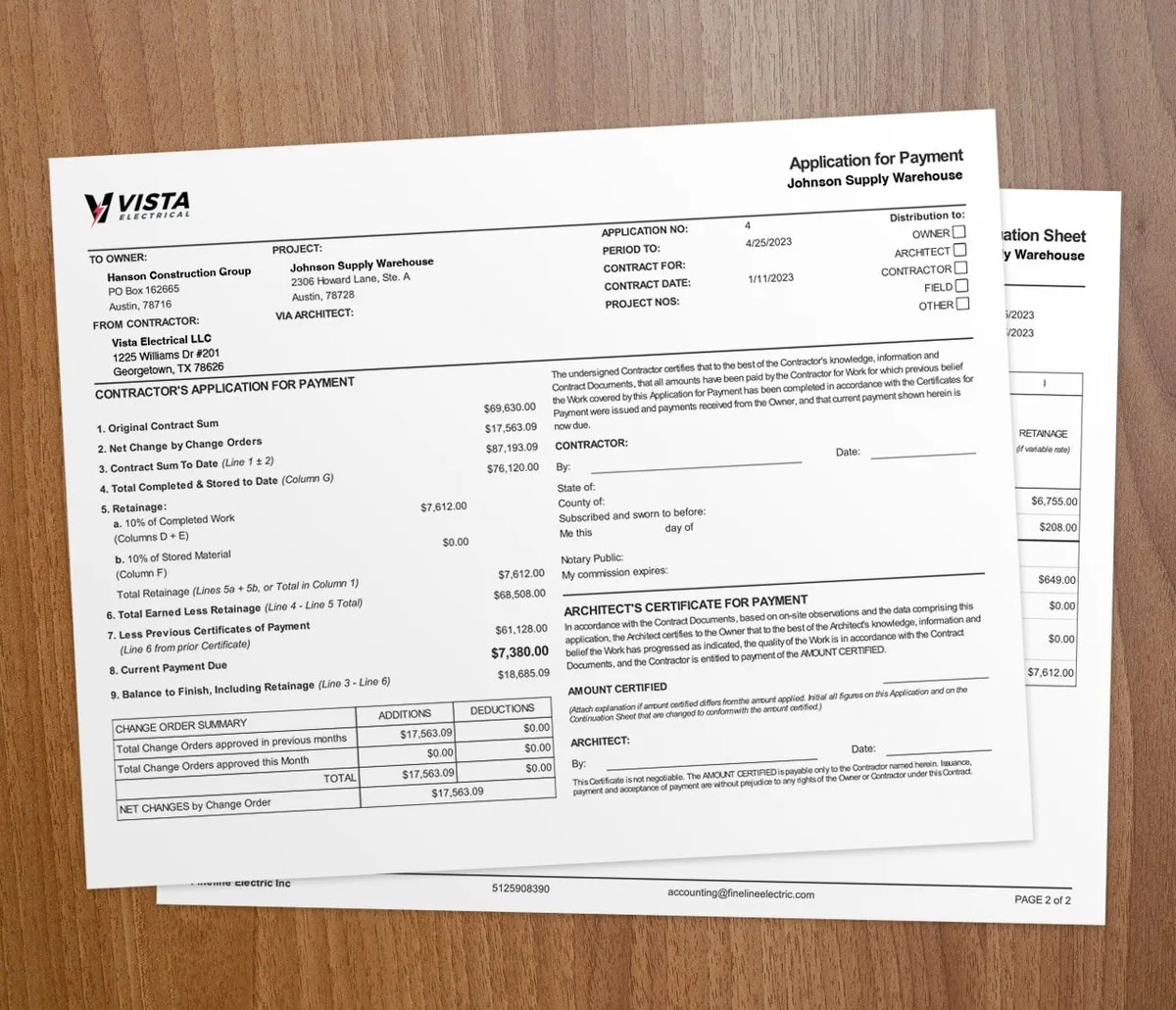

The best project management app for contractors is the one that handles the work general tools skip: estimating, progress billing, AIA pay applications, time tracking, change orders, and QuickBooks Online sync. General task tools track to-do lists but miss the money side of a job. This guide compares the top options so you can pick the right fit for your trade and team size.
Why do contractors need a dedicated app?

General tools like Asana or Monday.com are not built for construction. They track tasks well but miss the money side of a job, like pay apps, retainage, and job costing.
A contractor app bridges the field and the office. Crews get what they need on site. Owners and managers get real-time numbers on cost and progress.
What should a contractor app include?
Must-have features
- Estimating and proposals: Build detailed estimates that turn into projects and invoices
- Time tracking: Log labor from the field on a phone, tied to each job
- AIA-style billing: Generate G702/G703 pay apps with retainage tracking
- Progress billing: Bill by percent complete against a schedule of values
- QuickBooks integration: Sync financials and skip double entry
- Payment processing: Take online payments right from the invoice
- Mobile app: Full use from the jobsite, not just the office
Nice-to-have features
- Change order management with client approvals
- Extra work authorization capture with digital signatures
- Material and equipment tracking
- Client portal for project visibility
Top project management apps for contractors
1. Werx
Werx is built for small-to-midsized contractors who want one simple platform across the full job.
Strengths: - Flexible estimating with itemized and proposal-style options - AIA billing with automated retainage and schedule of values - T&M project tracking for service-based work - Time tracking with a field app for real-time labor logging - Free QuickBooks integration - Payment processing via Stripe - Pricing starts at $49/month, with every feature on every plan
Best for: Electricians, plumbers, HVAC contractors, general contractors, roofers, and remodelers.
2. Procore
Procore is an enterprise platform for large commercial firms. It covers project management, quality, and safety, but it comes with a big price tag.
Strengths: Document management, RFIs, submittals, quality and safety modules Weaknesses: Overkill for small contractors; costly and complex to set up Best for: Large commercial GCs and construction managers
3. Buildertrend
Buildertrend targets residential builders and remodelers with client communication, selections, and scheduling.
Strengths: Client portal, scheduling, lead management Weaknesses: Limited AIA billing; higher cost for full features Best for: Custom home builders and residential remodelers
4. Jobber
Jobber is built for home service businesses, not construction. It shines at scheduling and dispatch.
Strengths: Route planning, CRM, scheduling Weaknesses: No construction billing like AIA, progress billing, or retainage Best for: Lawn care, cleaning, and other service businesses
5. CoConstruct
CoConstruct focuses on custom home builders with strong client communication and selection tools.
Strengths: Client selections, communication portal, budget tracking Weaknesses: Costly; limited T&M and AIA billing Best for: Custom home builders focused on client experience
Comparison table
| Feature | Werx | Procore | Buildertrend | Jobber | CoConstruct |
|---|---|---|---|---|---|
| AIA Billing | Yes | Limited | Limited | No | No |
| T&M Tracking | Yes | No | No | No | No |
| QuickBooks Sync | Free | Add-on | Yes | Yes | Yes |
| Field App | Yes | Yes | Yes | Yes | No |
| Starting Price | $49/mo | Custom | Custom quote | $69/mo | $399/mo |
How do you choose the right app?

1. Start with billing. If you do AIA or T&M work, pick software that supports it natively. 2. Size it to your team. Enterprise tools add complexity small teams do not need. 3. Check integrations. QuickBooks sync is essential for most contractors. 4. Test before you commit. Use a free trial to see how the tool fits your workflow.
Which app is right for your business?
Match the tool to your work, not the brand name. Small and mid-size contractors who bill AIA or T&M usually get the best value from a focused platform like Werx. Large commercial GCs with heavy document and safety needs may justify Procore. Home service businesses lean toward Jobber.
If you are weighing options for a smaller crew, read this guide to project management apps for small teams. For a wider view of running jobs well, see these construction project management strategies and how project management software helps small builders.
Key takeaways
- Contractors need construction-specific apps, not general task tools.
- Look for estimating, AIA billing, time tracking, and QuickBooks sync.
- Werx offers strong value for small-to-midsized contractors at a low starting price.
- Enterprise tools like Procore are more than most small firms need.
- Always test with a free trial before you commit.