
To start a roofing business, you need four things: a solid plan, the right licenses and insurance, quality tools, and a way to find customers. Each piece protects the next, and a weak plan or a missed license can sink the whole thing. Here is how to set up each part the right way.
How do you get a roofing business started?

Begin with a business plan. It should spell out your goals, target market, financial forecast, and marketing strategy. Do real market research to learn the demand in your area and find your first customers.
Then handle the practical parts: securing funding through loans or investors, sourcing quality materials, and building ties with reliable suppliers. Pick a location for operations, buy the tools and vehicles you need, and hire experienced workers to lift your service quality.
Build technology into the plan from day one. A tool that manages multiple active jobs from one platform keeps projects on track as the work gets complex.
What licenses and permits does a roofing business need?
You need the right licenses and permits before you bid work. Requirements vary by state and city, so research your state and local rules carefully.
Key requirements
- Contractor's license: Establishes legitimacy and opens the door to larger jobs.
- Safety certifications: Show you meet safety standards that protect workers and clients.
- Bonding: Assures customers the job gets finished on agreed terms.
- Insurance: General liability covers damage, and workers' compensation covers your team.
Many clients also ask for proof of coverage, so learn how a certificate of insurance works before your first contract.
How to handle licensing challenges
Work with local industry associations for courses and resources. A legal advisor who knows construction can help you get the application right and stay compliant.
What tools and technology does a roofer need?
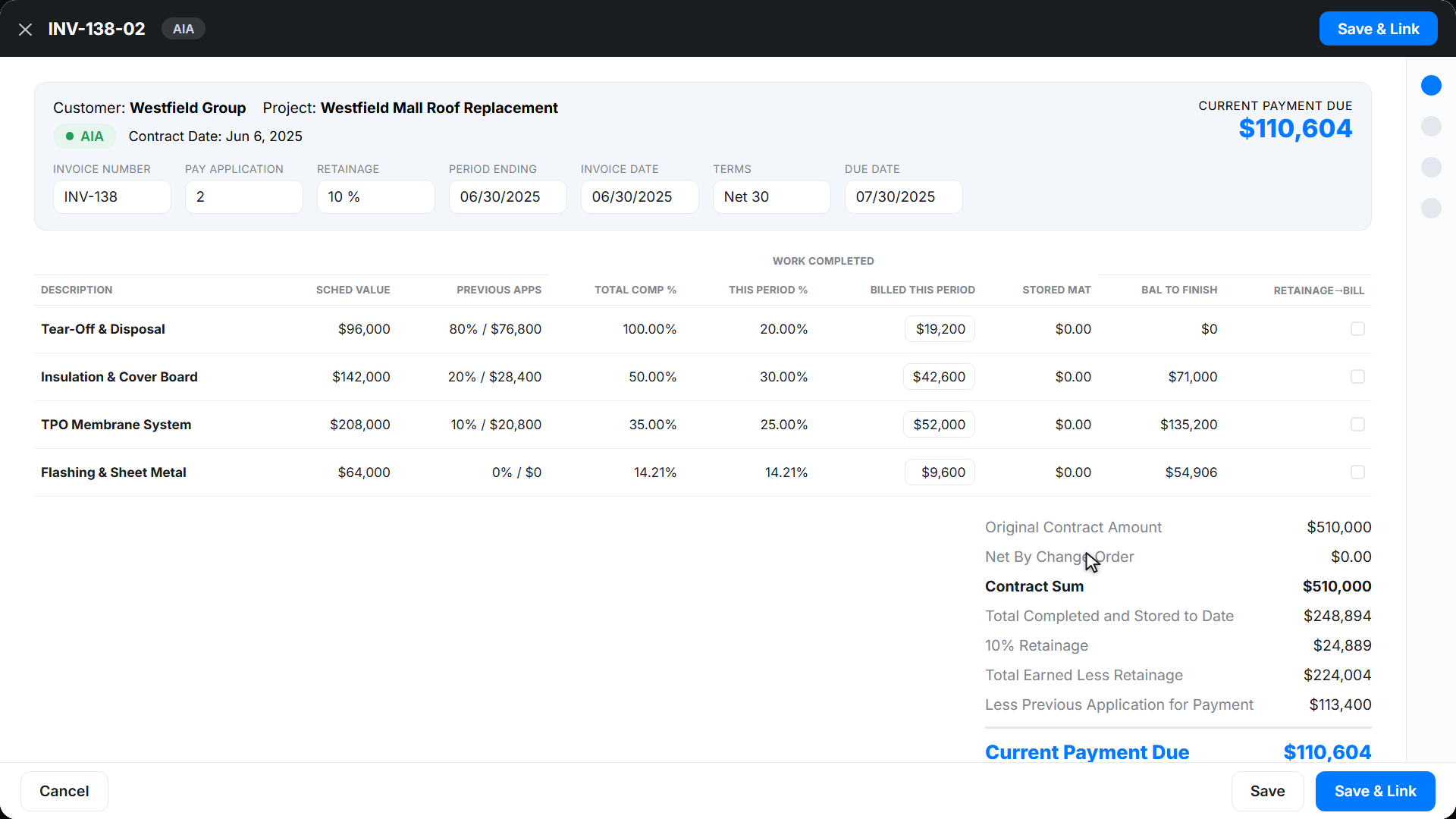
Match your gear and your software to the work you take on.
Physical tools
Buy quality ladders, nail guns, roofing blades, and safety equipment. These directly affect how fast and how well you deliver each job.
Technology solutions
Project software built for contractors handles the office work, from job costing to scheduling. Key features include:
- AIA-style billing for progress-based payment schedules
- QuickBooks integration for real-time financial sync
- Time tracking to watch labor cost and hours worked
- Electronic payment processing for faster client payments
How do you market a roofing business?
You need a marketing plan that brings in steady leads. Build a digital presence and a clear reason to pick you.
Digital marketing
Build a professional website that shows your services, past projects, and reviews. Strong local SEO helps customers find you when they search for a roofer nearby. Use social media to engage your audience and build your brand.
Build a unique selling point
Find what sets you apart, whether it is craftsmanship, service, or technology. Say it clearly in all your marketing.
How do you study the competition?
Know your market before you bid against it.
Market research
Pull data from public records, online reviews, and surveys with potential clients. Watch for shifts in demand, like more interest in energy-efficient roofing.
Build a referral network
Build ties with other contractors, suppliers, and real estate pros. Attend industry events and join local business groups to grow your network.
Should you start with residential or commercial roofing?
Start with residential if you want steady, smaller jobs and faster cash. Bids are simpler, the work is high volume, and you can build a review base quickly.
Go commercial if you have the capital and crew for longer jobs and AIA-style billing. Pay cycles run longer, but contracts are larger. Many new shops start residential, then add commercial as cash and crew grow. For a similar startup path in another trade, see our guide on how to start an electrical contractor business.
Common challenges and solutions
- Regulatory compliance: Stay current on local rules and lean on a legal advisor.
- Securing funding: Build a solid plan and explore several funding sources.
- Customer acquisition: Market consistently and build trust through reviews.
- Service delivery: Use estimating software to plan jobs accurately and manage contracts.
Key takeaways
- A business plan with real market research is the base of a roofing startup.
- Proper licensing, bonding, and insurance are non-negotiable for legitimacy and protection.
- Quality tools and contractor software with QuickBooks sync keep operations clean.
- A strong digital and local marketing presence drives customer acquisition.
- Contractor software like Werx ties billing, time, and job tracking into one platform as you grow.