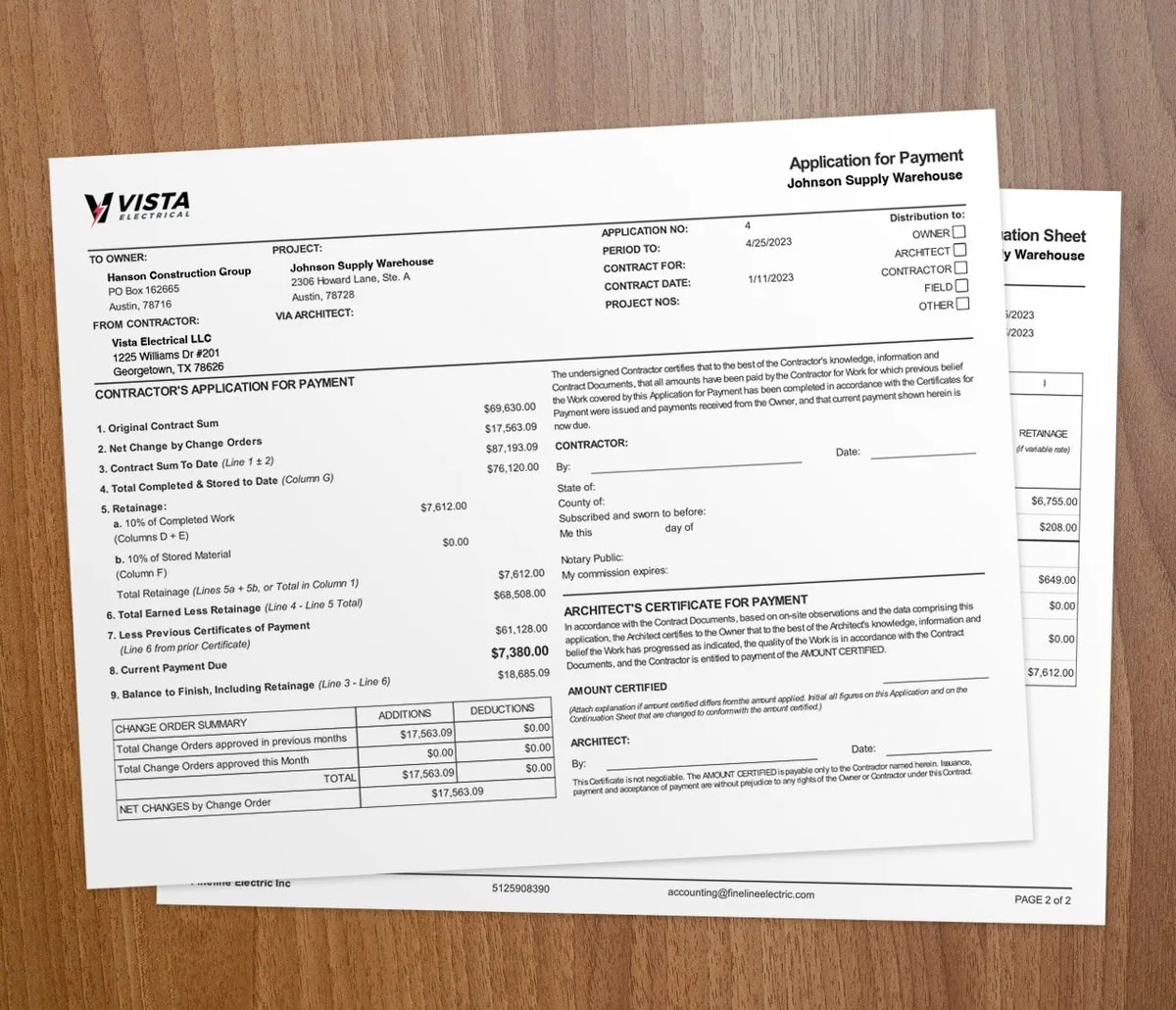

Retainage is the part of each payment an owner holds back until the job is done. It usually runs 5% to 10% of the contract. Track it well and you protect cash flow and collect every held dollar.
What is retainage?
Retainage, also called retention, is a percent of each progress payment the owner withholds until the project reaches substantial or final completion. The typical rate is 5% to 10% of the contract value, though it varies by state, project type, and contract terms.
Retainage gives the owner a reason to make sure you finish all the work, including punch-list items and fixes. It works as security that pushes the job to completion. For the basics, see our guide to retainage in construction billing.
How does retainage work in practice?
| Billing period | Work billed | Retainage held (10%) | |
|---|---|---|---|
| 1 | Application 1 | $22,000 | $2,200 |
| 2 | Application 2 | $34,500 | $3,450 |
| 3 | Application 3 | $28,700 | $2,870 |
During the project
On each billing cycle, you submit a payment application for work completed. The owner approves it but holds the retainage percent. For example, on a $100,000 monthly billing with 10% retainage:
- Billed amount: $100,000
- Retainage withheld: $10,000
- Amount paid: $90,000
Over a long job, that withheld amount adds up to a big sum. It can squeeze your working capital.
At project completion
Once the project reaches substantial completion and you finish punch-list items, retainage is released. The process usually goes like this:
1. You submit a request for retainage release. 2. The architect or engineer certifies the work is complete. 3. The owner processes the retainage payment.
In practice, release often takes 30 to 90 days after completion. That creates a real cash flow gap.
How do you track retainage effectively?
Use the right billing tools
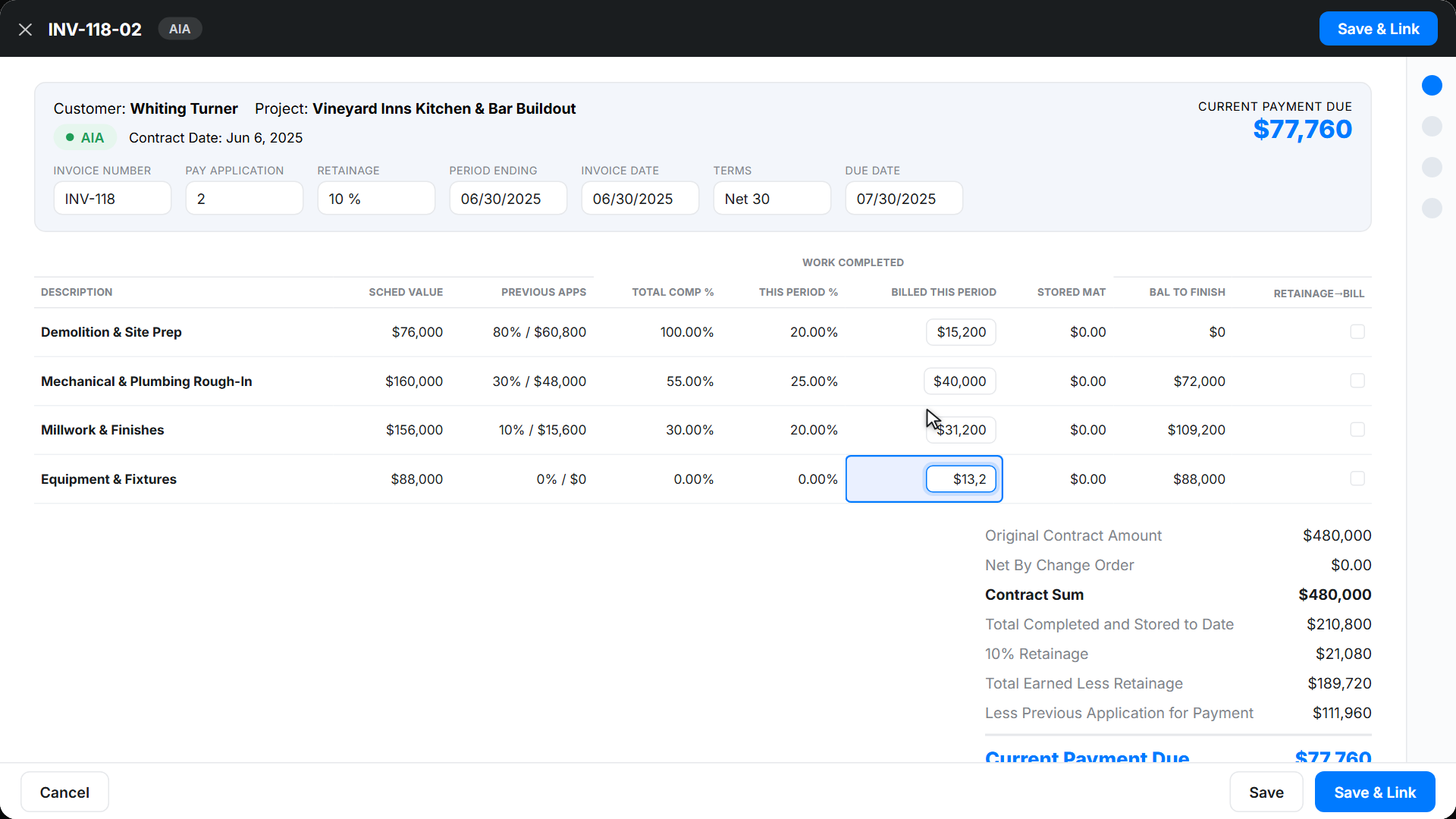
AIA billing documents track retainage on both the G702 and G703 forms. These standard forms keep retainage calculated correctly across billing periods. For the line-by-line steps, read our AIA retainage billing guide for G702 and G703.
Keep accurate records
Track retainage apart from regular receivables in your accounting system. Your QuickBooks integration should hold retainage as its own category, so you always know how much is held on each job.
Monitor retainage across projects
When you run many projects at once, retainage adds up fast. A progress billing system that shows a portfolio view of retainage balances helps you plan for this cash flow factor.
How do you manage retainage?
Bill accurately to avoid delays
Overbilling, claiming more work is done than is true, is a common reason owners delay retainage release. Accurate progress billing all job long builds trust and supports timely release.
Complete punch lists promptly
Retainage release usually waits on finishing all punch-list items. The faster you handle the punch list after substantial completion, the sooner the money comes.
Submit release requests promptly
Do not let release requests sit. Submit your request as soon as you are eligible, with all required documents and lien waivers.
When should you negotiate retainage down?
Negotiate retainage before you sign, especially on long or large jobs where the held amount will be big. A few points off 10% can free up real cash over the life of the work.
Push for these terms when you can:
- Reduced rates: Some owners will agree to 5% instead of 10%.
- Retainage reduction: Cut or end retainage after the job hits 50% complete.
- Prompt release: Set clear timelines for release after substantial completion.
On short jobs with little held back, it may not be worth the back-and-forth. Save the negotiation for contracts where the math moves the needle.
How does retainage affect cash flow planning?

Smart contractors plan for retainage's hit to cash flow:
- Factor withheld retainage into your project cash flow projections
- Keep enough working capital or credit to cover the gap
- Build retainage timing into your forecasting
- Use time tracking and job costing data to project when retainage will land
For a deeper look, see how retainage affects construction cash flow and our guide on progress billing and retainage.
What are the legal considerations?
Retainage laws vary by state. Some states cap the maximum percent, require retainage held in escrow, or set release timelines. Know the laws in your state and write compliant retainage terms into your contracts.
For subcontractors, "pay-when-paid" and "pay-if-paid" clauses affect how retainage flows down from the general contractor. Understand these before you sign any subcontract.
Key takeaways
- Retainage is 5% to 10% of each payment, held until substantial or final completion.
- Release often takes 30 to 90 days after completion, so plan for the cash gap.
- Track retainage as its own category, apart from regular receivables.
- Bill accurately and finish punch lists fast to speed up release.
- Negotiate lower rates or early reduction on long jobs where the held amount is large.