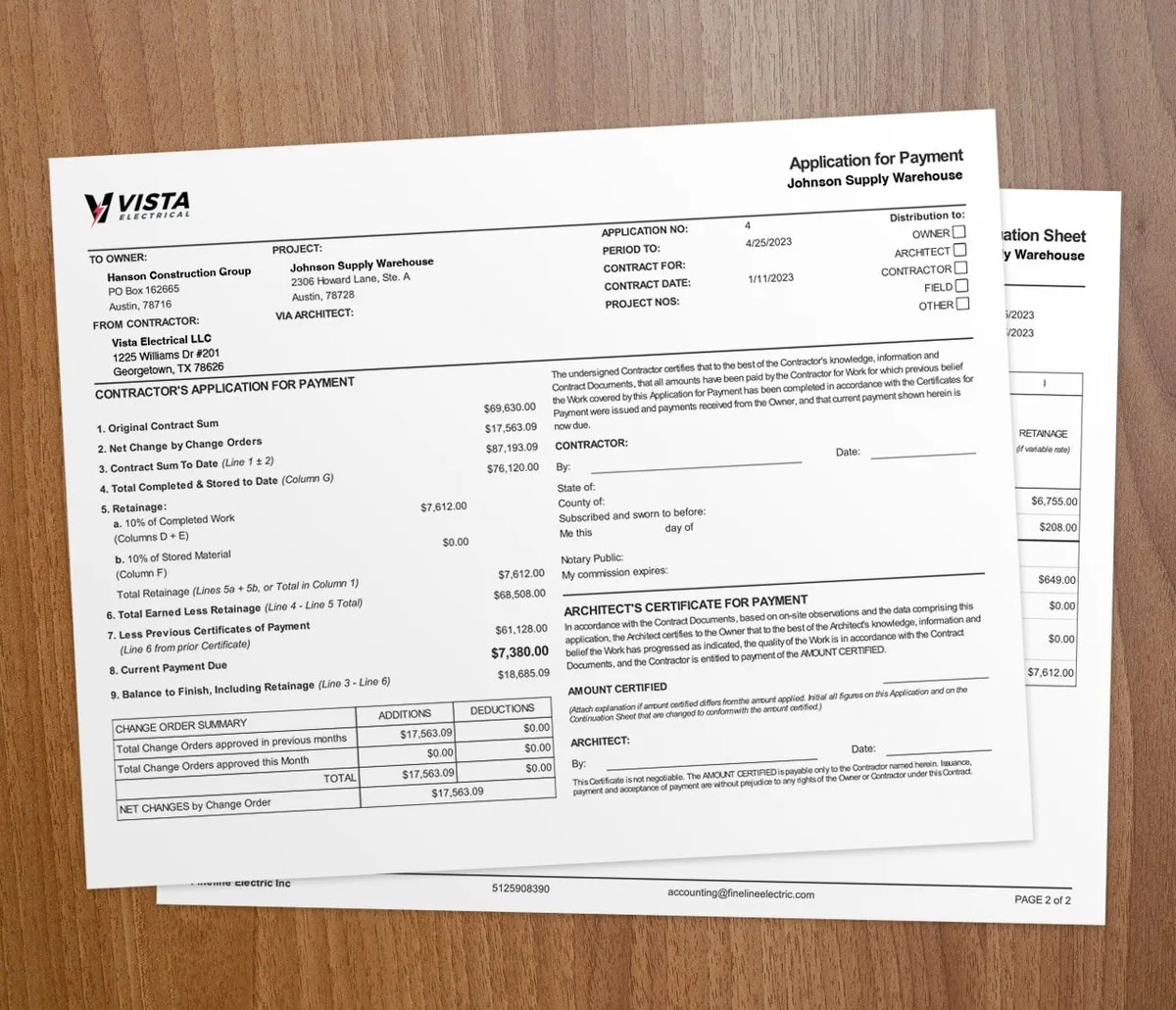

Fixed-price and time and materials (T&M) contracts are the two main ways to price construction work. Fixed price sets one total for a defined scope. T&M bills for the actual hours and materials used, which fits jobs where the scope can change.
Understanding construction contracts
In construction, the contract type you pick shapes whether a job makes money. A contract sets the terms between you and the client, including scope, deliverables, and how you get paid.
At a glance: fixed-price vs T&M
Fixed-Price (Lump Sum):
- Best for: Projects with well-defined scopes (new builds, standard installs)
- Risk: Contractor absorbs the cost of overruns
- Benefit: High profit potential if managed efficiently
Time and Materials (T&M):
- Best for: Projects with undefined scopes (remodels, repairs, emergency work)
- Risk: Client absorbs the risk of inefficiency
- Benefit: You get paid for every hour worked
Knowing the core differences helps you pick the contract that fits the job. Match the contract type to the project's complexity, scope, and your risk tolerance.
What is a fixed-price contract?
A fixed-price contract (often called a lump sum) sets one total price for the whole job. You agree on that figure before work starts, and it covers all materials, labor, and overhead.
Structure and risk profile
The main parts are:
1. Lump sum amount: One total paid at completion or at milestones 2. Scope of work: A firm description of deliverables 3. Payment schedule: Progress billing based on the schedule of values
Predictability vs financial risk
For clients, fixed price means budget safety. For you, it demands precision. Cost overruns are common on construction jobs, especially large ones. In a fixed-price deal, if material prices spike or labor runs long, those costs eat straight into your profit.
To manage that risk, use precise estimating software so your lump sum covers the variables. Pricing the job right also means knowing your markup vs margin.
Advantages of fixed-price contracts
- Cost certainty: Clients know the total upfront, which helps them plan
- Simple budgeting: Costs are locked in, with no fluctuation
- Less invoicing: Requires less detailed billing than T&M
- Profit incentive: Finish under budget and you keep the difference
Disadvantages of fixed-price contracts
- Inflexibility: Any change needs a formal change order, which slows work
- Risk of overruns: Underestimate the job and you pay the difference
- Detailed estimates required: You need strong estimating to stay accurate
| Labor — journeyman, 32 hrs @ $95 | $3,040 | |
| Labor — apprentice, 24 hrs @ $55 | $1,320 | |
| Materials — pipe, fittings, valves | $1,180 | |
| Equipment — trencher rental, 2 days | $640 | |
| Markup on materials & equipment (15%) | $273 |
What is a T&M contract?
A time and materials (T&M) contract pays you for the actual time spent and materials used. It is the standard for service trades like plumbers and HVAC techs, where you do not know the full problem until the wall is open. Our free time and materials calculator shows how a T&M bill adds up.
Structure of T&M contracts
1. Hourly labor rates: Loaded rates that include wages, overhead, and profit 2. Material markups: Actual material cost plus a percentage markup 3. Not-to-exceed (NTE) cap: A client-set ceiling that keeps costs from running away
Advantages of T&M contracts
- Adaptability: Great for remodels in older homes where surprises are common
- Guaranteed profit: You get paid for every hour worked and do not eat delays
- Transparency: Clients see where their money goes through itemized invoices
- Quick start: You can begin without a finished, detailed estimate
Disadvantages of T&M contracts
- Unpredictable cost: Clients may hesitate since they do not know the final bill
- Admin burden: You must log every hour and receipt. A field app with time tracking automates that logging
- Dispute potential: Clients may ask whether a task really took that long
For a deeper look at where T&M shines, read the benefits of time and materials billing.
Comparison table: fixed-price vs T&M
| Feature | Fixed-Price Contract | Time & Materials (T&M) |
|---|---|---|
| Primary Benefit | Cost certainty for the client | Flexibility for the contractor |
| Who Carries Risk? | Contractor (cost overruns) | Client (efficiency and speed) |
| Scope Definition | Must be defined upfront | Can evolve as the job moves |
| Billing Method | Percent complete / AIA billing | Hourly rate plus materials |
| Best Industry Fit | New construction, roofing, solar | HVAC service, restoration, remodeling |
When should you choose fixed-price vs T&M?
Project scope and complexity
If you install a standard system, the scope is clear, so use fixed price. If you fix water damage, the scope is unknown, so use T&M to protect yourself.
Risk tolerance
Confident in your numbers? Fixed price pays higher margins when you are efficient. Unsure about site conditions? T&M keeps a tough job from turning into a money loser.
The role of technology
Either way, managing a contract by hand invites trouble. Software closes the gap:
- For fixed price: Use progress billing to track actual cost against your estimate in real time. That shows whether you are still profitable.
- For T&M: Use time and material projects tracking to log field labor and turn it into an invoice. That removes the admin load that makes T&M hard. The T&M billing software guide covers this in depth.
Key takeaways
- Fixed-price contracts reward efficiency but punish estimating errors.
- T&M contracts offer safety but require careful logging of hours and materials.
- The best contractors use a mix of both, picking the method that fits each job.
- A not-to-exceed cap makes T&M easier for cost-wary clients to accept.
- Contractor software like Werx handles both contract types, which protects your margin.