
Growing revenue as a general contractor comes down to four moves. Win profitable jobs, bill fast, track real costs, and add recurring work. Volume alone does not grow profit. Better systems do.
Many GCs stay busy but not profitable. The fixes below turn that effort into steady revenue.
How do you estimate to win profitable jobs?
Your estimate sets both your win rate and your profit. Price too high and you lose the bid. Price too low and you win a job that loses money.
Build accurate quotes with estimating and proposal tools. Pull data from past jobs to sharpen each new bid. Accuracy improves with every project you track.
Itemized estimates also build trust. When clients see where each dollar goes, they pay a premium for quality work.
How do you bill faster and protect cash flow?
Slow billing is one of the biggest cash flow killers for GCs. Send invoices the moment a milestone is done.
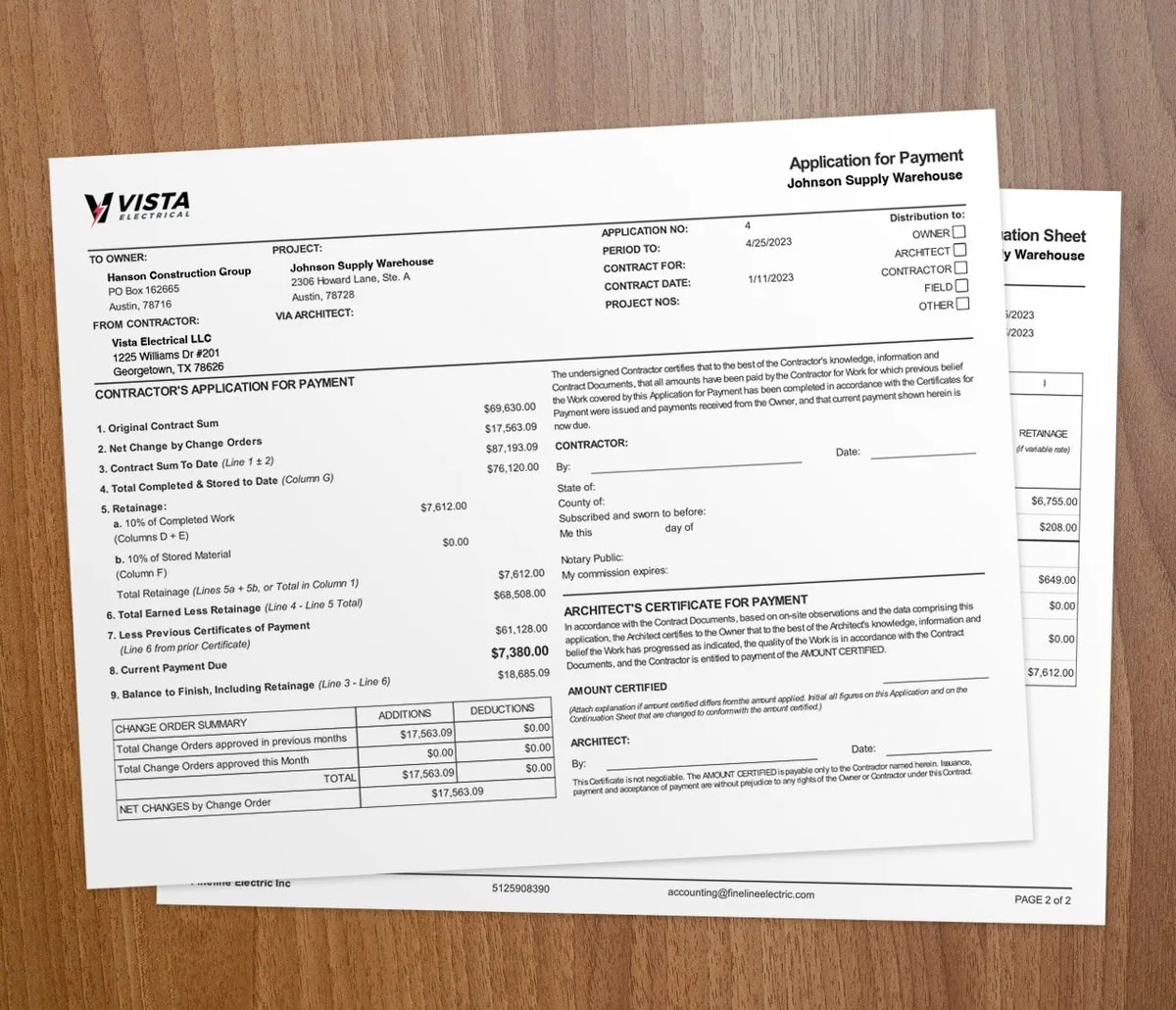
For progress jobs, progress billing software handles pay applications, retainage, and your schedule of values. AIA G702 and G703 forms are the standard format owners and architects expect on commercial work.
Track retainage on every active job. Retainage usually runs 5% to 10% of each payment, held until the work is nearly done. Submit release requests on time so no money slips away.
How do you find the real profit on each job?
Job costing tells you the truth about a project while it is still running. Track labor with time tracking and compare actual costs against your estimate as the job moves.
Manage change orders before the work starts. Document the extra work, get client approval, and update the budget. Unbilled change orders are lost revenue.
Cut rework too. Clear communication and quality checks reduce the costly mistakes that eat margins. For the full method, see real-time job costing.
How do you add new revenue streams?

Adding services raises revenue per client. Consider a few that fit your core work:
- Pre-construction like feasibility studies and value engineering
- Maintenance and warranty work on jobs you already finished
- Construction management for owners who need oversight
- Design-build to capture both design and build fees
You can also target new markets. If you run residential, test commercial work, or the other way around. Government and institutional jobs add growth but bring more compliance.
How do you build recurring revenue?
Recurring revenue smooths out the slow months. Offer maintenance contracts and service plans to past clients. Predictable monthly income is easier to plan around than one-time jobs.
A simple plan starts with the clients who already trust you. See how to offer subscription-based services as a contractor.
How do strong client relationships grow revenue?
Clear communication builds trust and brings referrals. Keep clients posted on progress, issues, and timeline changes. Share real-time updates so there are no surprises.
Then deliver. Quality work, on time and on budget, brings repeat clients and word of mouth. A simple referral system turns happy clients into a steady lead source. Learn how to build a strong referral network.
When should you focus on revenue vs. profit?
Chase revenue when you have idle crews and capacity to fill. More volume helps only when each job earns a margin. Filling a schedule with break-even work just burns cash.
Focus on profit when you are already busy. Raise prices, tighten job costing, and drop low-margin work. Our free markup vs margin calculator shows what your current markup actually earns. Growth that does not add profit is not worth the strain.
Key takeaways
- Accurate estimates win profitable jobs, so track past data to improve each bid.
- Fast, automated billing with retainage tracking speeds up cash flow.
- Real-time job costing shows true profit and flags margin leaks early.
- New services, new markets, and recurring contracts add fresh revenue.
- Strong client relationships drive repeat work and referrals.