
Cloud-based construction software is the future for contractors because it gives the office and the field the same live job data from any device. That ends version mix-ups, cuts errors, and shows real cost while the job is still moving. Paper files, spreadsheets, and old desktop software cannot match that. For small and midsized contractors, the cloud is now the practical choice, not a luxury.
What does cloud-based software do better?

It puts your data online instead of locking it on one office computer. Project managers, field leads, accountants, and clients all see the same current info. No one digs through old paperwork or works from a stale file.
Real-time access keeps jobs moving
Crews and office staff upload documents, schedule changes, and notes as they happen. Everyone works from accurate info, so fewer delays come from missing details. See more ways cloud tools save time in construction.
Fewer delays from miscommunication
When the plan changes, the change reaches the field right away. That cuts the rework that comes from a crew building off an old drawing.
How does the cloud connect the field and office?
It closes the gap between the jobsite and the back office in real time. Updates to drawings, RFIs, notes, and task lists reach everyone at once. When estimators and field supervisors share the same info, errors and rework drop.
The Werx Field App lets crews log hours, track labor cost, and document extra work right from the jobsite. That feeds accurate job costing and gives managers a live read on labor. Reliable time tracking is the base of that coordination.
Is cloud data safe?
Yes, when the platform is built right. Cloud tools encrypt data both stored and in transit. They add firewalls, intrusion prevention, automatic backups, and disaster recovery. That lowers the risk of data loss, theft, or corruption far below a single office PC.
Clear audit trails for compliance
Cloud software logs and timestamps file updates, billing changes, and user activity on its own. That makes audits simpler and keeps a clear record when questions come up.
How does the cloud improve your finances?
It gives you accurate budgets, faster invoicing, and a clearer forecast. The numbers update as the job does, so you are never guessing.
QuickBooks sync for clean books
Manual entries breed errors. A QuickBooks integration syncs your financial data so estimates, invoices, and payments land in your books without re-typing.
Better budget control
Live cost, labor, and material data helps you stay on budget. You can see overruns starting and act before they grow. Tighter estimating feeds this loop and keeps each new bid sharper.
Simpler time and materials billing
On hourly or variable-scope jobs, automated time and materials tracking captures labor, materials, equipment, and expenses. It turns that into clean invoices, so you bill for everything you actually spent.
How does the cloud make AIA billing easier?
| Line item | Scheduled value | % complete | Completed to date | |
|---|---|---|---|---|
| 1 | Mobilization & permits | $10,000 | 100% | $10,000 |
| 2 | Rough-in | $70,000 | 80% | $56,000 |
| 3 | Panels & gear | $50,000 | 45% | $22,500 |
| 4 | Fixtures | $45,000 | 20% | $9,000 |
| 5 | Trim & final | $25,000 | 0% | $0 |
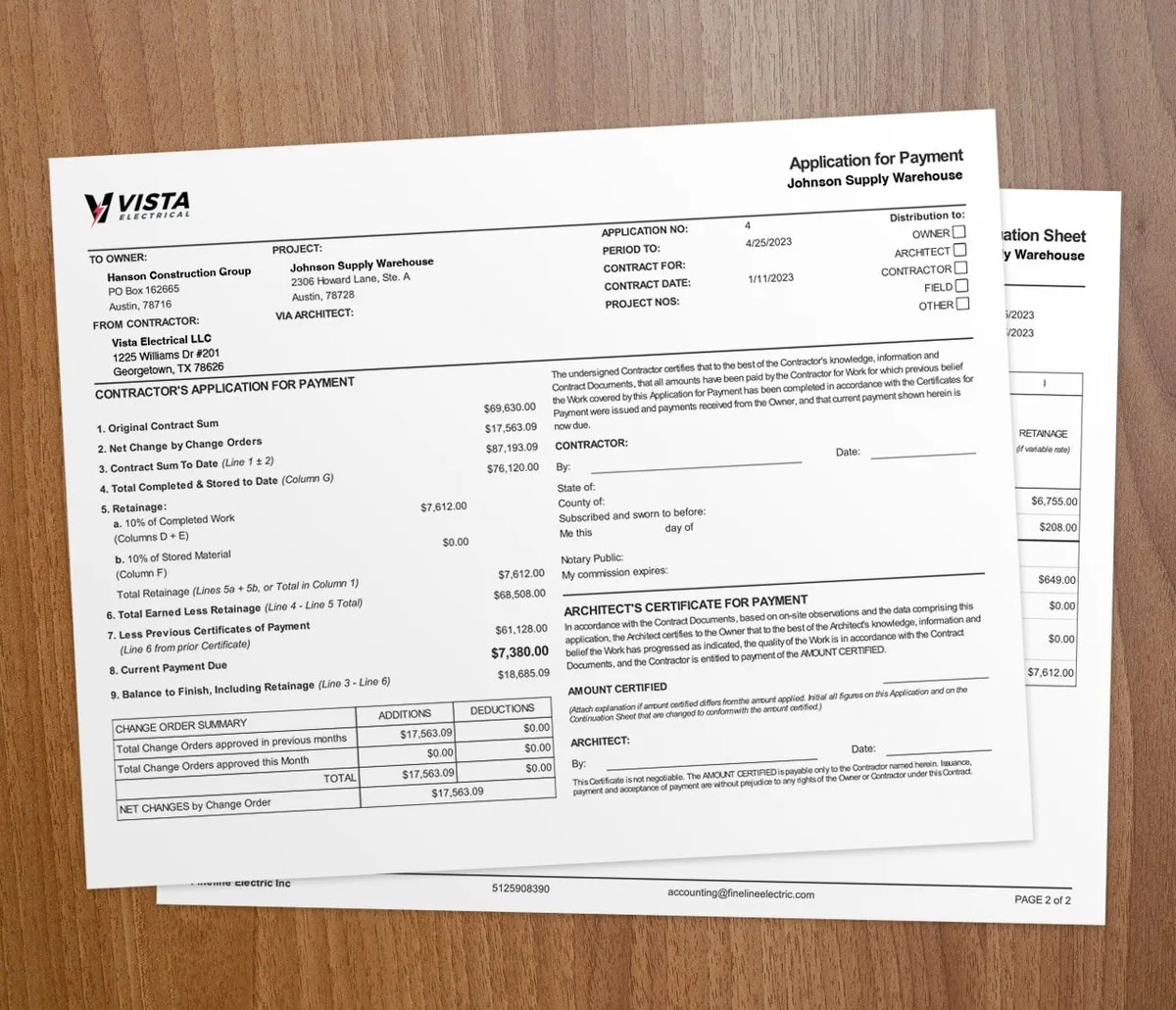
AIA billing is detail heavy and slow by hand. Cloud tools cut the busywork and improve accuracy. Werx AIA billing handles the schedule of values, retainage, progress billing, and percent-complete invoices using the standard G702 and G703 forms.
As you update job progress, the billing updates with it. That reduces disputes and builds owner trust. Retainage of 5% to 10% per payment is common, and the software tracks every held dollar so you collect it later.
When should you move to the cloud?
Move now if your team is spread across jobsites, your crews log hours by paper, or your books never match the field. The more jobs you run at once, the more a cloud platform saves. It also scales without buying servers or paying for IT, so you only pay for what you use.
You can wait if you run one short job at a time from a single desk. At that size a spreadsheet may hold up. As you grow, the cloud becomes the safer call. For quick wins once you switch, read our 5 tips to boost cloud construction efficiency, and see where the construction tech trends are headed.
Key takeaways
- Cloud software gives the field and office the same live job data from any device.
- Real-time updates cut rework caused by old drawings and missing details.
- A QuickBooks sync keeps your books current without double entry.
- The cloud simplifies AIA billing, progress billing, and time and materials tracking.
- Cloud tools scale with your business without buying servers or IT support.