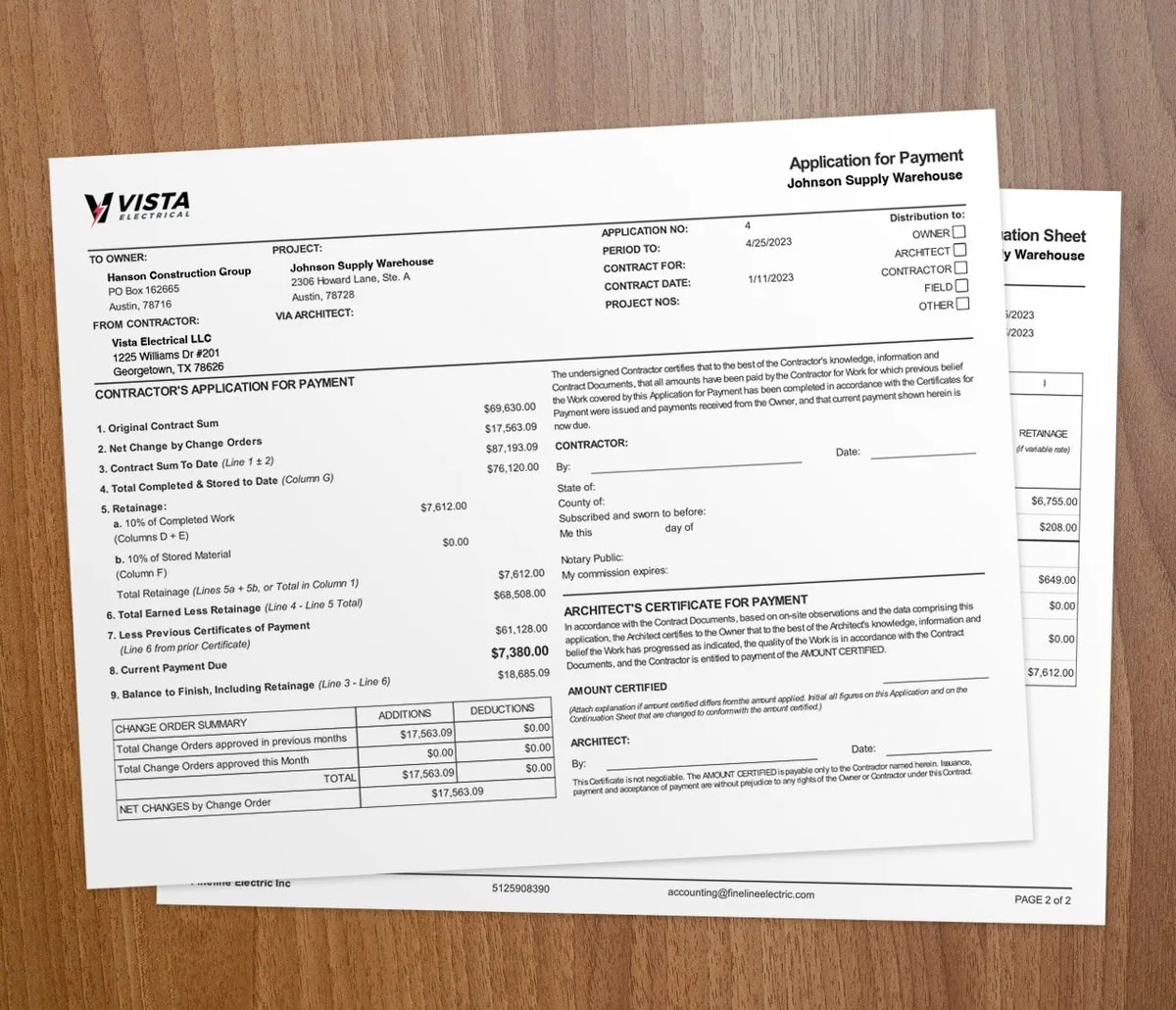

Job costing tracks every cost on a single job, then compares it to your estimate. That tells you which jobs make money and which lose it. Without it, you can stay busy and still go broke.
What is job costing and why does it matter?
Job costing tracks all costs tied to one project. That means labor, materials, equipment, subcontractors, and overhead. General accounting looks at the whole business. Job costing tells you if each job is winning or losing.
For contractors, this is the line between guessing and knowing. Without it, you can win plenty of work and still bleed cash. Jobs that cost more than you bid can sink your year.
The components of job costing
Labor costs
Labor is usually the largest variable cost on a job. Accurate labor tracking needs three things:
- Log hours by project and task: Know how many hours each worker spends on each job
- Include burden rates: Add payroll taxes, insurance, and benefits on top of base wages
- Track overtime: Overtime hits labor cost hard and should be tracked on its own
Use time tracking tools so field crews log hours from the jobsite. That gives you accurate, real-time labor data.
Material costs
Track all materials bought for each job, including:
- Direct material purchases
- Material waste and returns
- Markup applied to materials
- Stored materials not yet installed
Subcontractor costs
When you hire subs, their costs become part of your budget. Track sub invoices, retainage, and change orders against the original budget. Retainage on subs often runs 5% to 10%, like the retainage owners hold on you.
Equipment costs
Include equipment rental, fuel, maintenance, and depreciation for each job. Even owned equipment has a cost. Spread it across the jobs that use it.
Overhead allocation
Overhead covers office rent, insurance, admin staff, and vehicles. These costs need to land on each job. Common methods use a percent of revenue or a percent of labor cost.
| Cost code | Budget | Actual to date | Variance | |
|---|---|---|---|---|
| Labor | $38,000 | $41,300 | -$3,300 | |
| Materials | $27,500 | $26,100 | +$1,400 | |
| Subcontractors | $18,000 | $18,000 | $0 | |
| Equipment & other | $6,500 | $7,050 | -$550 |
Best practices for accurate job costing
Track costs in real time
Do not wait until the job ends to add up costs. Real-time tracking lets you catch overruns while you can still fix them. Time and material tracking gives you live visibility into job spend.
Compare estimated vs. actual costs
After each job, compare your estimate to actual costs. This shows where your bids are right and where they drift. Over time, that feedback loop sharpens your estimating a lot.
Use consistent cost codes
Build one standard set of cost codes your team uses on every job. Consistent coding lets you compare costs across jobs and spot trends. For a setup guide, see how to standardize cost codes and assemblies.
Separate direct and indirect costs
Direct costs like labor, materials, and subs attach to one job. Indirect costs like overhead need an allocation method. Keeping them apart makes your job cost reports more accurate.
How does technology make job costing easier?
Integrated project management
Modern contractor software connects estimating, time tracking, billing, and accounting. That link removes the manual work of pulling data from many tools. You set budgets, track actual costs, and watch real-time job costing from one dashboard.
QuickBooks integration
QuickBooks integration sends all job costs into your accounting system on their own. You get accurate, current reports without manual entry.
AIA billing alignment
For progress-billed jobs, AIA billing software ties billing to your schedule of values. That makes it easy to track revenue against cost for each phase.
Common job costing mistakes

- Not tracking labor accurately: Guessing hours instead of logging them live
- Ignoring overhead: Makes jobs look more profitable than they are
- Waiting until the job ends: By then it is too late to adjust
- Inconsistent cost codes: Makes it impossible to compare across jobs
- Skipping burden rates: Leaves out payroll taxes, insurance, and benefits, so labor looks cheaper than it is
Is detailed job costing worth it for your business?
Detailed job costing pays off once you run more than one job at a time. If labor and materials are your biggest costs, you need this view. It is essential for contract jobs with fixed budgets.
A single small job with a few line items may not need deep tracking. But the moment you add crews and subs, loose tracking gets costly. For a number-by-number walkthrough, read our real-time job cost calculations guide.
Key takeaways
- Job costing tracks all costs per job: labor, materials, subs, equipment, and overhead.
- Real-time tracking lets you catch overruns before they turn into losses.
- Compare estimated vs. actual costs on every job to sharpen future bids.
- Standard cost codes make comparison across jobs possible.
- Integrated software removes manual data gathering and shows profit fast.