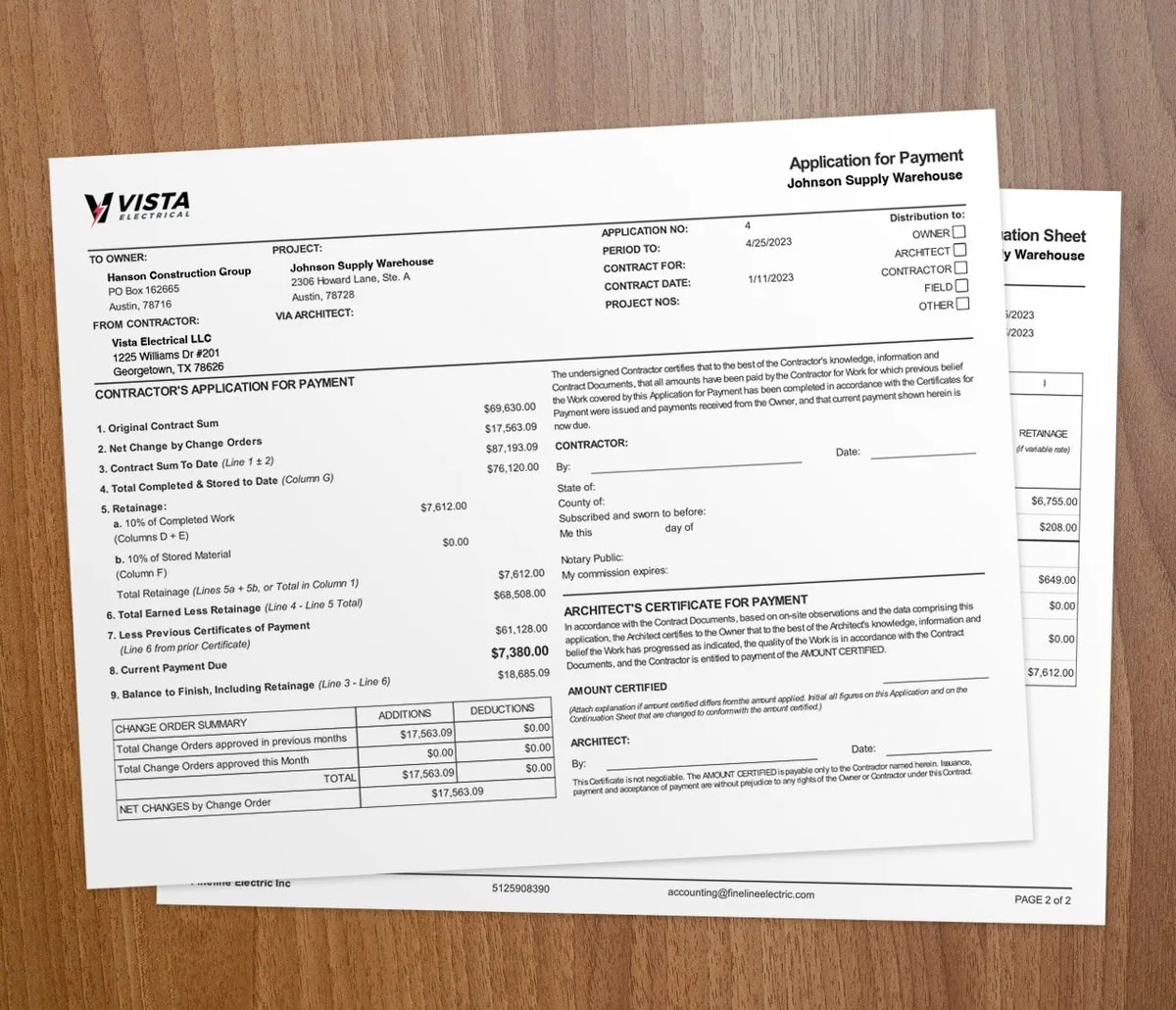

Tracking change orders protects your budget, your schedule, and your client relationships. These changes to the original scope come from design tweaks, hidden site conditions, or client requests. Track each one well and you stay in control of cost and timeline. Track them poorly and small adds turn into overruns and disputes.
Why does tracking change orders matter?

Change orders touch cost, schedule, and client trust all at once. Good tracking keeps you in control of the job while it builds transparency with the owner.
Keep costs accurate
Change orders add costs for labor, materials, and equipment. Without tracking, those costs can run past budget. Capture and document every change and costs stay accounted for, which protects your profit. Pair tracking with progress billing software for clean invoicing on each change.
Protect yourself legally
Construction jobs involve many parties, and change order disputes happen. Documented scope, costs, and approvals serve as evidence if a claim comes up. Accurate records protect your interests.
Keep the schedule on track
Change orders can shift timelines, resources, and task order. Track changes as they happen and you can judge the impact and keep the job moving. Time tracking tools help you manage those labor shifts.
Improve communication
Change orders affect cost, schedule, and execution. Tracking keeps everyone informed, gets approvals on record, and shares updates with the team. Clear communication cuts misunderstandings and keeps working relationships strong.
Build a clean record
Detailed records of each change order, with revised scope, costs, and approvals, give you a history log. That log is valuable during audits, claims, or warranty periods. AIA-style billing tools help you manage changes alongside regular project billing.
Boost client trust
Clients value clear, professional updates. Diligent tracking builds trust and sets clear expectations. Well-organized updates make clients more likely to come back.
What are the best practices for tracking change orders?
To manage change orders well, build these habits:
1. Use Extra Work Authorizations (EWAs). Document client requests for added work on an EWA before pricing is added. 2. Combine change requests. Roll up several EWAs into one Change Order Request to simplify approvals. 3. Use the right tools. Use software to create, track, and approve change orders fast. Our free change order generator is a simple place to start. 4. Communicate updates. Keep stakeholders posted on each change and its impact on timeline and budget.
How does the three-step workflow work?
Change order management runs in three clean steps.
Step 1: Extra Work Authorization (EWA)
Field teams create an EWA to document a client request for added work. The EWA captures the change but adds no pricing yet, which keeps approvals fast on the job site.
Step 2: Change Order Request
Project managers turn signed EWAs into Change Order Requests, adding pricing and combining EWAs when needed. These go to the client for review.
Step 3: Change Order
Once the client approves, the change order is finalized and added to the schedule of values for billing. That keeps every change and its cost tracked. For the full chain, read how to handle extra work authorizations.
When should you log a change order?
Log a change order the moment work falls outside the signed scope. Do not wait for billing day. The earlier you capture it, the easier it is to price and approve.
For a tiny, no-cost field tweak, a quick written note may do. For anything that touches price or schedule, run the full process. For more on a clean process, read this guide to change order management and the basics of what a change order is.
Key takeaways
- Tracking change orders protects cost, schedule, and client trust.
- Documented scope, costs, and approvals give you legal protection.
- Use EWAs first, then roll them into a single Change Order Request.
- Approved changes go onto the schedule of values for clean billing.
- Change order tracking software runs the EWA to change order workflow in one place.