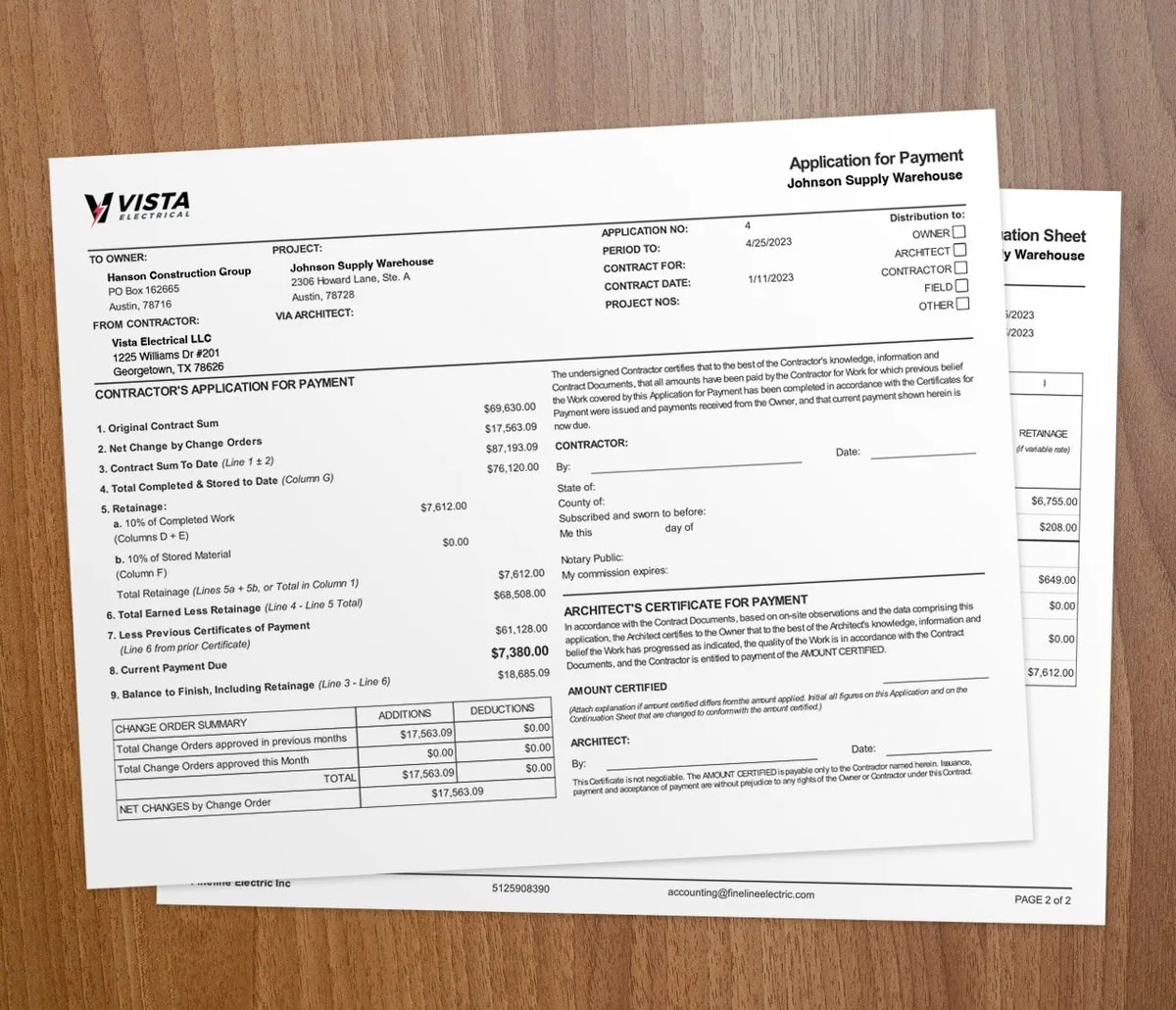

To grow a painting business, work four levers: fast estimates, steady marketing, clean operations, and solid financials. Those systems let you take on more work without losing quality or profit. A growth plan turns them into a path you can follow, whether you are hiring your first crew or opening a new market.
How do you speed up your estimating process?
Your estimate is often the first thing a client sees from your business. A clear, detailed proposal builds trust and wins jobs.
Professional proposals win jobs
Polished, itemized estimates show you are organized and fair. Use estimating and proposal tools to lay out scope, materials, labor, and price in a way clients can read fast.
Speed matters
In a tight market, the contractor who answers first often wins the job. A quick estimating process lets you quote fast without losing accuracy. Templates and past job data help you estimate the same way every time.
Track your win rate
Watch how many estimates turn into jobs. If your close rate feels low, review your pricing, your presentation, and your follow-up. Small gains in close rate add up to real revenue.
How do you build a marketing engine?

You need more than one way to bring in leads. Build a presence online and protect your reputation.
Online presence
- Professional website: Show your portfolio with before-and-after photos, client reviews, and clear service descriptions.
- Google Business Profile: Claim and complete your listing so you show up in local search.
- Social media: Post project photos, tips, and behind-the-scenes content on Facebook, Instagram, and Nextdoor.
Reputation management
Online reviews are the new word of mouth. Ask happy clients for a review on Google and other sites. Reply to every review, good or bad. A steady lead pipeline from SEO and reviews keeps work coming with less ad spend.
Referral programs
Happy customers are your best marketing. Build a referral program that rewards clients who send you new business.
Commercial and property management
Do not skip commercial painting and property management accounts. These clients offer recurring work with steady volume, which is a strong growth engine.
How do you improve operational efficiency?
Smooth operations let you handle more jobs with the same stress level. Focus on crews, time, and materials.
Crew management
As you grow, running several crews gets harder. Clear daily assignments, quality expectations, and client rules keep work consistent across jobs.
Time tracking
Accurate time tracking shows which jobs make money and which eat your margin. Track labor hours against estimates to find waste and price better next time.
Materials management
Build relationships with paint suppliers for volume discounts. Track material cost per job so your markup holds. Wasted material cuts straight into profit.
How do you master your finances?
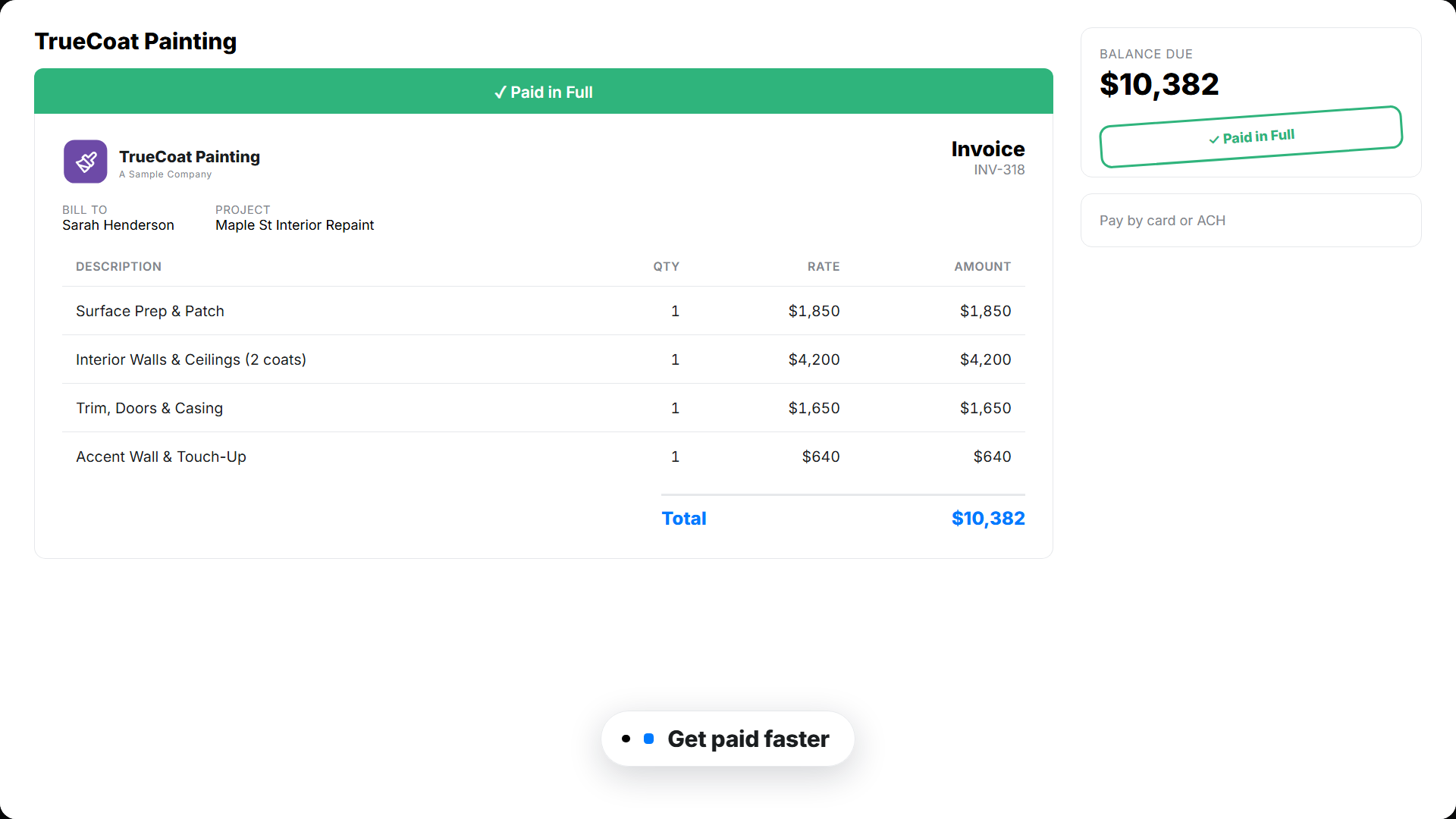
Good financials separate a busy painter from a profitable one. Watch your job costs and your cash flow.
Job costing
Know the true cost of each job: labor, materials, and overhead. Without real-time job costing, you can win plenty of work and still lose money on every project.
Billing and collections
Invoice the day a job wraps. Offer payment processing so clients can pay on the spot. Late payments kill cash flow, so set clear terms and follow up.
Accounting sync
QuickBooks sync ends manual data entry and keeps your books accurate. That gives you real-time views of profit, expenses, and cash flow, the numbers that drive growth.
How do you scale a painting business?
Scale on purpose, not by accident. Add capacity only where it pays off.
Hire carefully
Quality painters are hard to find. Spend on recruiting, pay fairly, and build a culture that keeps good workers. One reliable crew lead beats three painters you cannot count on.
Expand services
Add related services like pressure washing, staining, drywall repair, or wallpaper. These raise revenue per client and set you apart.
Geographic expansion
Before you chase new areas, make sure your current market is well served. Expand step by step, building density in new neighborhoods before you spread thin.
When is your painting business ready to scale?
You are ready when the basics run smoothly. Estimates go out fast, jobs hit their target margin, and you have steady lead flow. With those in place, hiring and new markets add fuel to a working engine.
Hold off if quality slips on your current load or cash runs tight between jobs. Fix the base first. The same playbook applies in other trades, as our guide on plumbing business growth plans shows.
How does technology help you grow?
Contractor software handles the office work so you can focus on growth. From estimates to invoicing to financial tracking, tools like Werx help painting shops run leaner and more profitably. Software that manages multiple active projects from one platform keeps progress and client updates in one place as job volume climbs.
Key takeaways
- Fast, professional estimates lift your close rate and win more jobs.
- Build a strong online presence with portfolio photos, reviews, and social media.
- Track time and materials per job to see true profit and price better.
- Invoice the same day and offer easy payment options to protect cash flow.
- Scale by hiring quality people, adding services, and using contractor software like Werx.