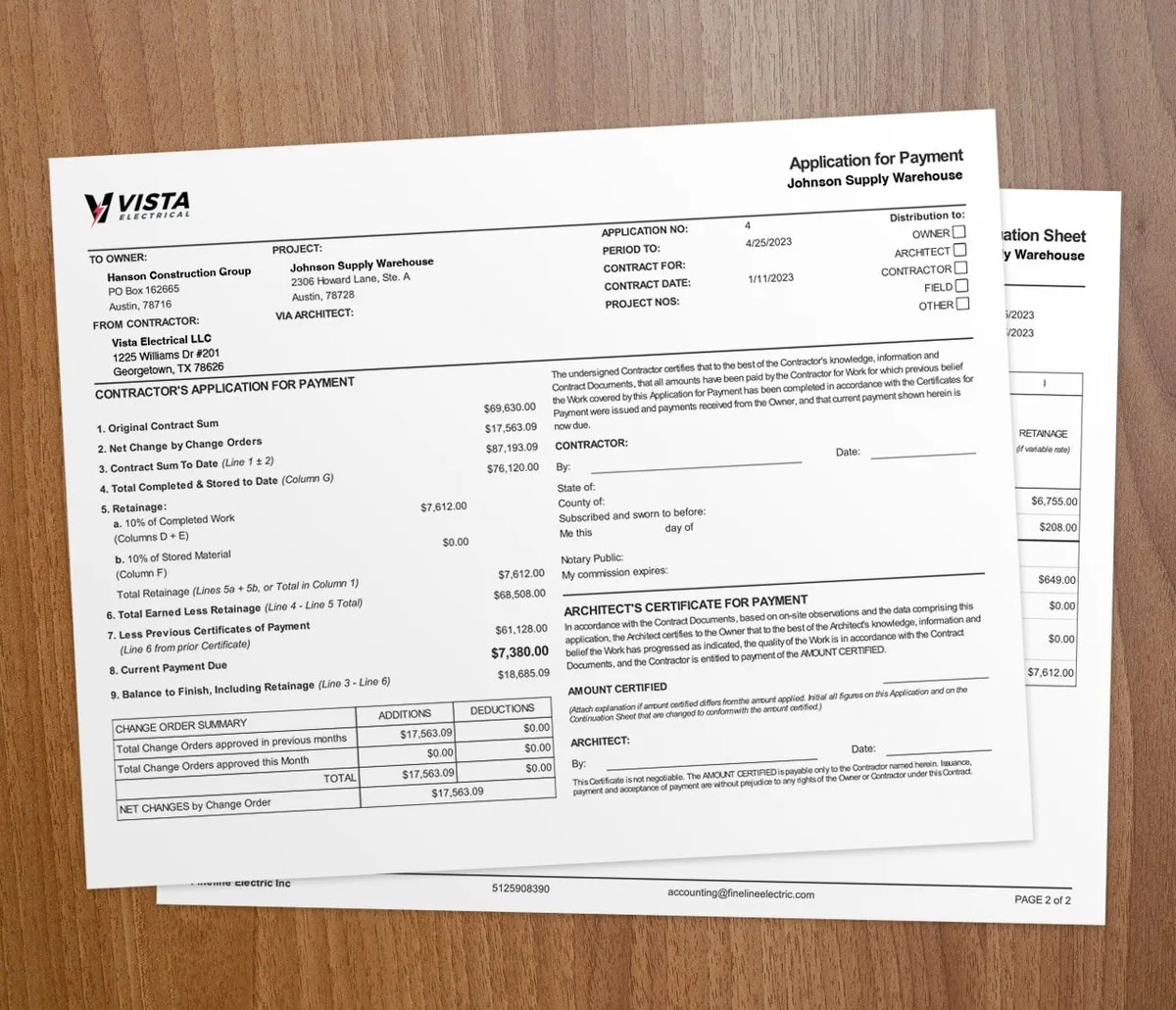

Real-time job costing tracks your costs against the estimate while the job runs. You see overruns as they happen, not weeks after. That gives you time to act and protect the margin.
Job costing is the backbone of profitable construction work. Traditional job costing tallies costs after the job is done. By then, the insight comes too late to use. Real-time job costing changes that by giving you live numbers.
Why does real-time job costing matter?
Catch overruns early
Reviewing costs only at the end is an autopsy, not a checkup. Real-time tracking lets you spot overruns as they happen. If labor is running 20% over estimate at the midpoint, you can dig in before it doubles.
Improve decisions
Live data leads to better calls. Should you add crew to speed up, or will the overtime cost more than it saves? With real numbers, you can model the choice instead of guessing.
Better client communication
When clients ask about costs or request changes, you answer with current data. That builds trust. It also heads off the hard talks that come from surprises at the end.
| Cost code | Budget | Actual to date | Variance | |
|---|---|---|---|---|
| Labor | $38,000 | $41,300 | -$3,300 | |
| Materials | $27,500 | $26,100 | +$1,400 | |
| Subcontractors | $18,000 | $18,000 | $0 | |
| Equipment & other | $6,500 | $7,050 | -$550 |
Tips for real-time job costing
1. Capture labor costs in the field
Labor is usually the largest controllable cost on a job. Mobile time tracking lets workers clock time to specific jobs and tasks from the field. That data feeds your cost reports right away, with no waiting on paper timesheets.
2. Track materials as they are used
Do not wait for invoices to capture material costs. Log materials to the job as they are delivered or installed. That keeps your picture current instead of weeks behind.
3. Set up cost code structures
Organize costs into clear categories. Think rough-in labor, finish labor, materials by type, equipment, and subcontractors. Consistent cost coding across jobs makes comparison and trend analysis possible.
4. Establish budget baselines
Real-time job costing only works when you have a baseline. Start every job with a detailed estimate that breaks costs into your cost code categories. That estimate becomes your budget baseline.
5. Monitor variance reports often
Set up reports that flag jobs where actual costs drift past your thresholds. Review them at least weekly. Werx contract project tools give this view, so you can drill into the cost categories driving each variance.
6. Act on the data
Live data only helps if you act on it. When a job shows overruns, dig in right away:
- Are labor hours over due to rework, scope changes, or crew issues?
- Are material costs up from waste, price hikes, or spec changes?
- Is the estimate itself off, so your process needs a fix?
7. Integrate your systems
Real-time job costing needs data from many sources. Time tracking, material buys, and sub invoices must flow into one place. A link between your field tools and accounting software keeps that data current.
When does real-time job costing pay off?
It pays off on contract jobs with fixed budgets, where overruns eat your profit. It also helps when labor is your biggest cost and crews work in the field. Multi-week jobs are where live tracking saves the most.
A half-day repair with one invoice may not need this depth. Once you run several jobs and crews, real-time tracking earns its keep fast. For a primer on the basics, see our essential job costing tips.
The compounding benefit
Each job with accurate cost data improves your next estimate. Over time, you build a record of real costs that makes every bid sharper. Contractors who track costs live get more competitive and more profitable. The same holds for trades like electrical work, as our electrical job costing strategies show.
Common pitfalls to avoid
- Over-complicating cost codes: Start with a few categories and add detail as needed.
- Inconsistent time logging: Make digital time tracking required, not optional.
- Ignoring small variances: Small overruns across many jobs add up to real profit loss.
- Not updating estimates: When costing reveals pricing errors, fix your estimate templates right away.
Key takeaways
- Real-time job costing compares live costs to your estimate while the job runs.
- It lets you catch overruns early, when you can still course-correct.
- Capture labor and materials as they happen, not after invoices arrive.
- Consistent cost codes and budget baselines make variance reports useful.
- Each tracked job sharpens your next bid, which compounds over time.