
Payroll liabilities are the money you owe tied to paying your crew. They are more than wages. They include federal and state tax withholdings, Social Security and Medicare, unemployment insurance, worker's comp, and benefit deductions. Get them right and you stay compliant, keep cash steady, and avoid penalties.
For contractors, payroll gets harder fast. Hours swing by week, crews move between job sites, overtime rules kick in, and you mix employees with subs on the same job.
What are the main types of payroll liabilities?

Federal tax withholdings
You withhold federal income tax from each paycheck based on the worker's W-4. That money is held in trust and sent to the IRS on a set schedule. Late or wrong deposits can bring real penalties.
FICA taxes (Social Security and Medicare)
Both you and your employee pay into Social Security (6.2%) and Medicare (1.45%). As the employer, you match the employee's share, so FICA costs you 7.65% of each worker's wages on top of their pay. Our free labor burden calculator adds these costs up to show each worker's true hourly cost.
State and local taxes
State withholding rules vary by state. Some have no income tax, others have layered rules. Crews working across state lines add complexity, since you track and remit by state.
Unemployment insurance (FUTA and SUTA)
Federal (FUTA) and state (SUTA) unemployment taxes fund benefits for workers who lose a job. State rates depend partly on your claims history, so steady employment can lower your rate over time.
Worker's compensation
Construction is high risk, so worker's comp is required and pricey. Premiums track your payroll, trade class, and claims history. Accurate time tracking keeps those premiums calculated on real numbers.
Benefit deductions
If you offer health insurance, retirement, or union dues, the employee's share comes out of their check. You then remit it to the right provider. Tracking and sending those funds is its own liability.
What payroll compliance challenges do contractors face?
Prevailing wage requirements
Government-funded jobs often require prevailing wages that differ from your standard rates. Proving compliance takes careful records. See our guide to certified payroll and prevailing wage compliance.
Overtime rules
The Fair Labor Standards Act (FLSA) requires overtime at 1.5x the regular rate for hours over 40 in a week. Some states add daily overtime rules. With long days and six-day weeks common in the field, overtime tracking is critical.
Employee vs. subcontractor classification
Treating an employee like a contractor is a common, costly mistake. The IRS penalizes misclassification, and you can owe back taxes, benefits, and worker's comp. Learn the rules in our guide to issuing 1099 forms to contractors, and ask a labor attorney when the call is close.
How do you manage payroll liabilities well?

Track time accurately
Everything starts with clean hours. When crews log time correctly, payroll, overtime, and job costing all follow. Use time tracking that captures hours by project, task, and worker from the field.
Keep a separate payroll account
Hold a dedicated bank account for payroll taxes and liabilities. Move money into it each payroll run so the cash is there when deposits are due.
Stay current on the rules
Tax rates, withholding tables, and compliance rules change often. Follow updates from your state labor department and the IRS, and consider a payroll service or accountant who knows construction.
Connect your tools
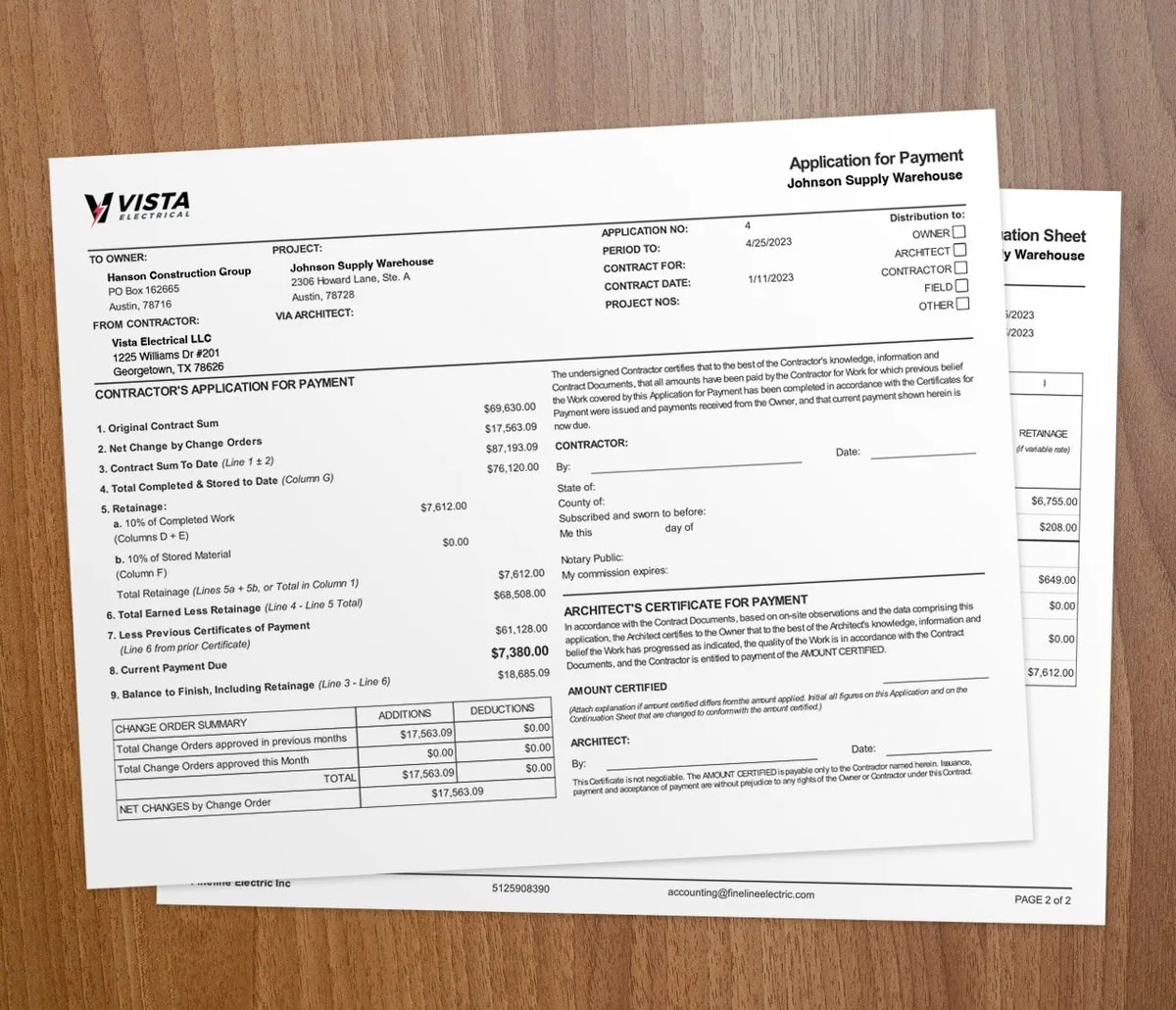
Construction software with QuickBooks integration sends payroll data straight into your books. That cuts errors, speeds reporting, and keeps you audit-ready. AIA billing and time and materials tracking tie labor costs to the jobs that create them. For a closer look at the withholdings on each check, see our guide to payroll deductions in construction.
What does getting payroll wrong cost?
Payroll errors can bring:
- IRS penalties for late or wrong tax deposits
- State fines for unemployment or worker's comp violations
- Employee lawsuits for wage and hour violations
- Back taxes and interest on misclassified workers
- Reputation damage that hurts hiring and retention
When should you bring in payroll help?
Handle payroll in-house while you have a small, single-state crew and simple pay rules. A solid time-tracking and accounting setup may be all you need.
Bring in a payroll service or construction accountant once you cross state lines, take on prevailing-wage jobs, or mix many employees and subs. The penalties for getting multi-state or prevailing-wage payroll wrong outweigh the cost of expert help. For the basics, see our overview of construction payroll liabilities.
Key takeaways
- Payroll liabilities include federal and state taxes, FICA, unemployment, worker's comp, and benefit deductions.
- As the employer you pay 7.65% in FICA on top of wages, plus FUTA and SUTA.
- Construction adds prevailing wages, overtime, and worker classification rules.
- Accurate time tracking is the foundation of correct payroll.
- Contractor software like Werx with QuickBooks sync cuts errors and keeps you audit-ready.