
A purchase order (PO) is a written agreement that sets the price and quantity for materials, equipment, or sub services before you buy. In construction, it does far more than track spending. It is a legal record, an inventory tool, and an audit trail all in one. Used well, the PO protects your budget and your business on every job. For how POs hold down spending, see the academy guide on using purchase orders to control costs.
How do purchase orders control your budget?
Construction jobs carry a long list of costs, from materials and equipment to sub services. A PO locks in the agreed price and quantity between you and the supplier. That keeps spending in check and holds fiscal discipline through the whole job.
POs also sharpen your cost tracking and forecasting. The Werx Estimates feature lets you tie purchase orders straight to project budgets, so approved spending stays visible and in line.
Are purchase orders a legal document?
Yes. A PO doubles as a legal agreement that protects both sides of a deal. It spells out the terms and conditions and creates a record you can point to if a dispute comes up. For a contractor, that record is your protection against a supplier who does not deliver as promised.
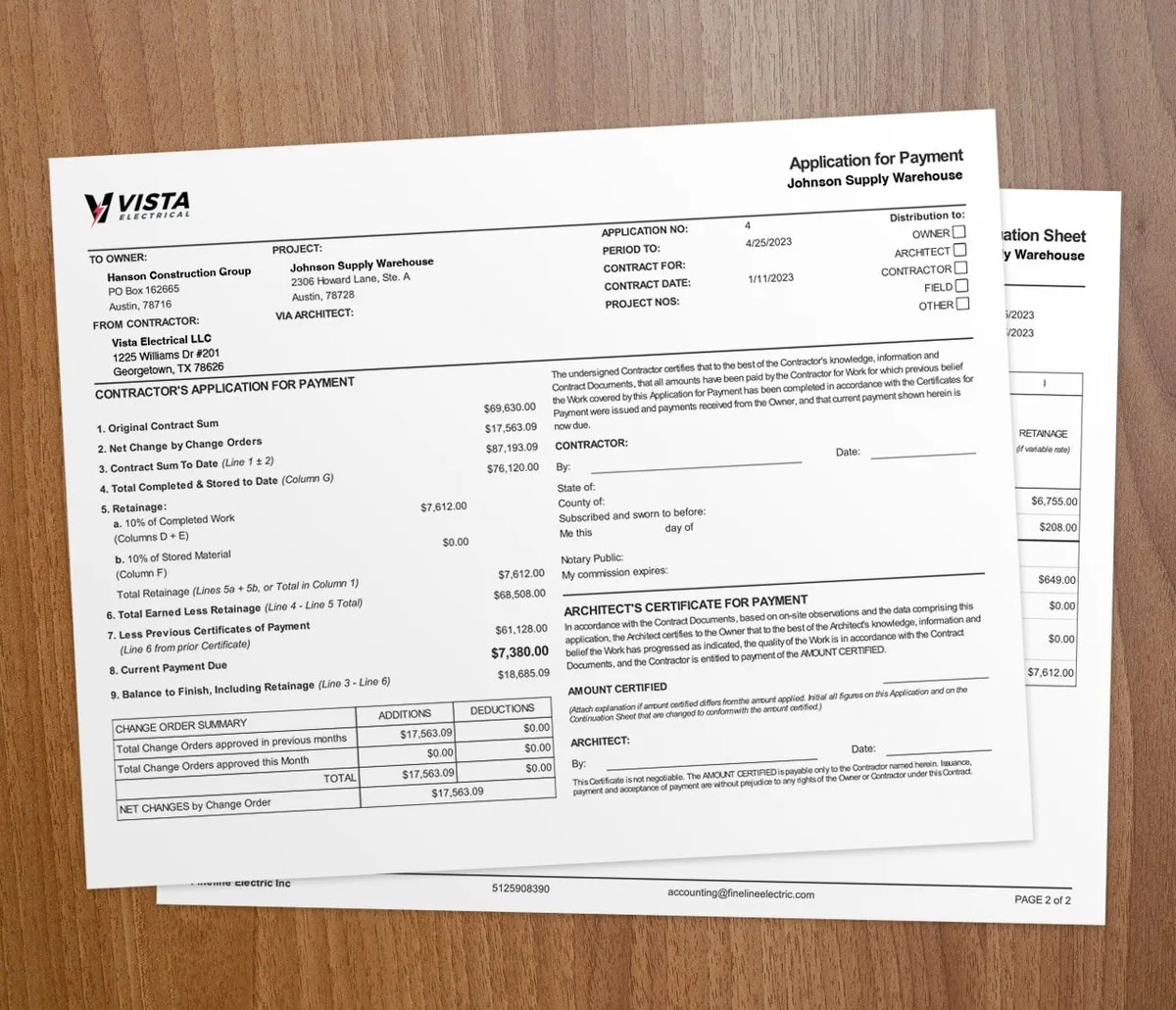
Pair POs with AIA-style billing and you formalize the money side too. Your pay apps stay in a standard format while progress payments and retainage track cleanly.
How do POs help manage materials and resources?
Good resource management keeps a job on schedule. POs give you a structured way to track materials and equipment, so the right resources show up when crews need them. That cuts delays, prevents overstock and shortages, and reduces downtime on site.
Tie material and labor costs to the job with the Werx Time Tracking system. You get precise resource allocation and tighter cost control across the project.
Why do purchase orders improve communication?
A PO is a written record of what you ordered: items, quantities, and prices. That detail cuts misunderstandings and keeps you and your supplier on the same page about what is coming and when.
Purchase order software lets you build and share detailed POs in a few clicks. Clear records build trust with vendors and head off the back-and-forth that slows orders down. If you are not ready for software, our free purchase order template covers the same details.
How do purchase orders create an audit trail?
Most jobs involve a lot of hands: project managers, procurement, accountants. POs document every transaction, so you get a clean audit trail. That makes internal audits easier, helps you meet compliance rules, and keeps every team accountable.
Sync your POs with accounting through QuickBooks integration and your financial records stay accurate and current without rekeying. For the fundamentals, review construction accounting basics.
What do you gain by automating purchase orders?

- Time savings: Automation cuts manual paperwork so you spend more time on the job.
- Better accuracy: Automated POs reduce errors and keep procurement details consistent.
- Built-in payments: With payment processing, you run transactions right inside the platform.
When should you require a purchase order?
Require a PO for any material or equipment buy above a dollar threshold you set, and for every recurring supplier account. It is the cheapest insurance against off-budget spending.
For a small same-day pickup, a logged receipt may be enough. Once orders get large, repeat often, or run through several suppliers, a PO process protects your margin and your paper trail. For more on the cost-control side, read our companion guide on the role of purchase orders in controlling costs.
Key takeaways
- A purchase order is a budget tool, a legal record, an inventory tracker, and an audit trail.
- POs lock in price and quantity, which prevents overspending and disputes.
- Tying POs to estimates and time tracking keeps cost control tight.
- A clean audit trail makes internal audits and compliance reviews easier.
- Automating and syncing POs with QuickBooks saves time and cuts errors.